Palestinian Factions: Solidarity Means Nothing Without Concrete Steps to Halt Occupation Crimes, Hold Its Leaders Accountable and End Gaza Siege
Palestinian factions call for turning international solidarity into concrete steps that stop the occupation’s crimes, end the siege on Gaza and bring its leaders to account.
Follow-up / Shehab
Palestinian factions have agreed on the need to turn international solidarity with the Palestinian people into effective popular, political and rights-based action that imposes pressure on the Israeli occupation to halt its crimes and the war of genocide in the Gaza Strip, end the siege, starvation and displacement, and bring its leaders before accountability and reckoning, stressing that solidarity positions should not remain confined to condemnation and expressions of support.
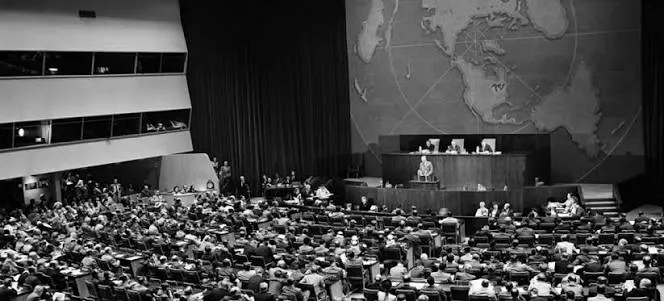
In separate statements marking the International Day of Solidarity with the Palestinian People, which falls today, Sunday, November 29, the factions stressed the importance of escalating popular mobilization in capitals and public squares and expanding forms of international pressure, leading to an end to the occupation and enabling the Palestinian people to attain their legitimate national rights.
The factions’ positions converged on a set of demands, most notably stopping the aggression on the Gaza Strip, breaking the siege, bringing in aid and reconstruction, holding the occupation’s leaders accountable for their crimes, confronting settlement and displacement in the West Bank and Jerusalem, and strengthening international solidarity with prisoners and refugees and with the Palestinian people’s right to freedom and self-determination.
Holding occupation leaders accountable
Hamas affirmed that the International Day of Solidarity with the Palestinian People represents a renewed opportunity to remind the international community of the scale of the crimes the occupation is committing in the Gaza Strip, the West Bank and occupied Jerusalem, and to place it before its political, legal, moral and humanitarian responsibilities to stop the aggression and criminalize Israeli terrorism.
The movement said the occasion comes as the occupation’s crimes continue despite the ceasefire agreement, with escalating massacres, siege, starvation, displacement and genocide, and restrictions on the entry of humanitarian aid into the Gaza Strip.
It noted that more than 1,700 Palestinians have been killed and over 6,120 others injured, alongside the occupation government’s continuation of its terrorism in the West Bank and occupied Jerusalem, its pursuit of settlement, annexation and Judaization plans, the demolition of buildings and the displacement of residents, and its unleashing of settlers to commit crimes against Palestinian civilians.
Hamas stressed that the responsibility to stop the aggression and hold the occupation’s leaders accountable is a shared one borne by the international community, the Arab and Islamic nations, UN institutions and the free people of the world, calling for an escalation of solidarity events in capitals, cities and squares and for strengthening support for the people of the Gaza Strip, who face crimes of aggression, starvation and displacement.
It affirmed that decades of aggression and terrorism have failed to break the will of the Palestinian people or extinguish their struggle, noting that the rising voice of global solidarity has come to haunt the occupation’s leaders and their government.
Isolating the occupation
For its part, the Popular Front for the Liberation of Palestine called for building an organized and sustainable international solidarity movement that transcends occasions and seasonal positions, is not tied to changing governments and electoral calculations, and works to besiege the occupation and end the system of impunity.
The Front stressed the need to move international solidarity to a more influential and organized stage, by isolating the occupation politically, economically, militarily, academically, culturally and athletically, holding it accountable before international and national courts, and expanding boycott, divestment and sanctions campaigns.
It called for targeting the occupation’s economic and military interests, including weapons factories, export and supply companies, investments and complicit financial funds, and for building permanent solidarity bodies, committees and networks that continue their work across various fields.
The Front commended the popular, official, union, cultural and academic positions and events in support of Palestine around the world, paying special tribute to the participants in the flotillas to break the siege on Gaza, the campaigns demanding accountability for the Israeli Football Association and its expulsion from international sports institutions, and the artists, academics, students, masses and players who made their platforms, squares and stadiums tribunes for defending Palestinian rights.
In the face of the ongoing war of genocide and siege, the Front stressed the need to escalate moves rejecting the prevention of relief and reconstruction for Gaza or the blackmail of its residents through their humanitarian needs, and to provide relief, shelter, medicine and food to the displaced, especially amid the humanitarian catastrophe and the harshness of winter.
It also called for escalating solidarity with male and female prisoners in the occupation’s prisons, confronting crimes of settlement and displacement in the West Bank, and attempts to target the right of return and the UN Relief and Works Agency for Palestine Refugees (UNRWA), affirming its rejection of any external guardianship over the Palestinian people and its adherence to its right to self-determination on its land.
Ongoing action
On the internal level, the Front called for launching a “Call of the People” and broadening national dialogue, and for turning its initiative into a national action program for rescue, in a way that strengthens the popular role in protecting national rights, safeguarding the unity of the people, the cause and national representation, and pushing toward ending the division, restoring unity and renewing representative institutions on democratic and consensual foundations.
In the same context, the Palestinian Freedom Movement affirmed that true solidarity with the Palestinian people is not complete at the limits of positions and expressions of support, but is embodied in practical victory for their full national rights, as fixed and inalienable rights.
The movement commended the renewed popular and humanitarian positions in various countries of the world, considering that they reflect an awareness of the scale of the Palestinian tragedy and a rejection of Israeli crimes and violations, but it stressed that the suffering of the Palestinians cannot be reduced to a single day, and that the continuation of the occupation’s crimes requires a humanitarian stance and continuous action every day.
It called on the peoples of the world and people of conscience to continue movements and pressure governments and institutions to take practical and responsible measures, and to intervene urgently to stop the war of genocide and put an end to the policy of impunity.
From its sea to its river
In turn, the Palestinian Resistance Committees called on the Arab and Islamic peoples and the free people of the world to launch a broad global popular movement, organize marches and solidarity events in capitals and squares, and escalate forms of popular, political and rights-based pressure in support of the Palestinian people.
It stressed that Palestine, from its sea to its river, is Arab Palestinian land, and that the partition resolutions, the mandate, the trusteeship and the liquidation schemes will not wrest from the Palestinians their historical right to their land, nor break their will or their belonging to their homeland and holy sites, affirming their adherence to their rights and national constants until the occupation is removed.