On the International Day of Solidarity with Palestine, the World Marks the Cause as Gaza Pays the Price of International Inaction
Coinciding with the International Day of Solidarity with the Palestinian People, international positions and events in support of Palestinian rights are renewed, while Gaza continues to endure a protracted humanitarian catastrophe caused by the genocide war and the occupation’s crimes, amid a persistent gap between UN resolutions and the reality on the ground.
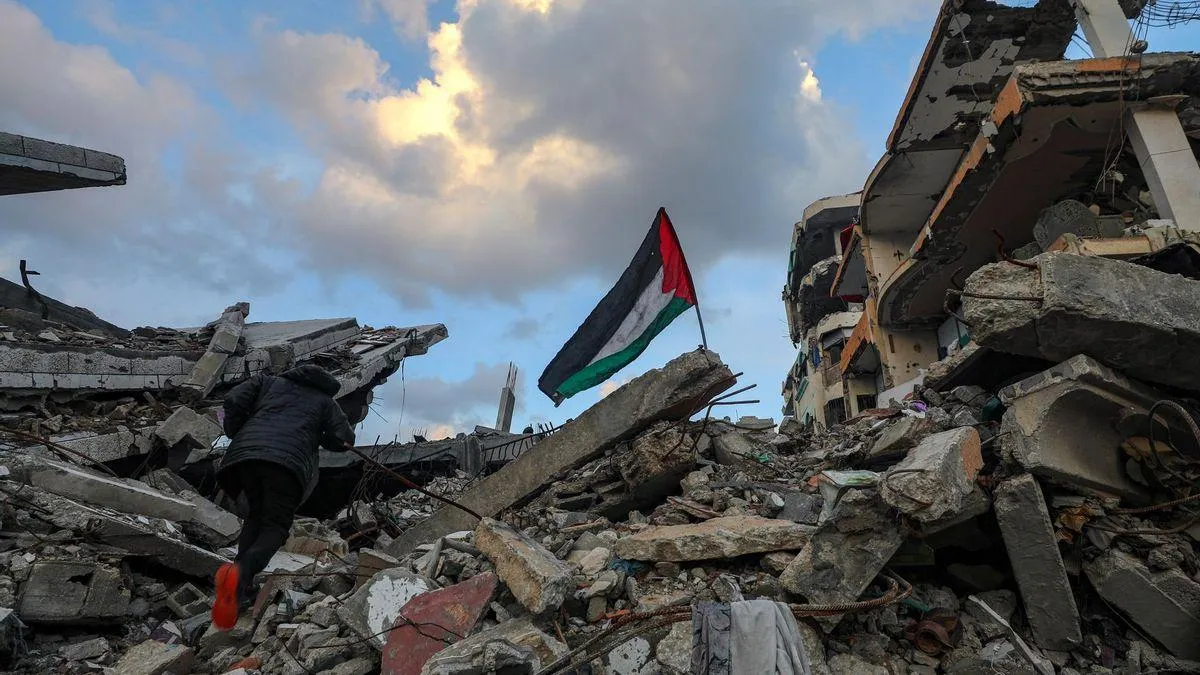
The International Day of Solidarity with the Palestinian People, marked on 29 November, comes as Gaza continues to face a protracted humanitarian catastrophe left by the genocide war waged by the Israeli occupation army, amid widespread destruction and deepening suffering endured by hundreds of thousands of displaced people, despite international positions and UN resolutions that are renewed annually in affirmation of Palestinian rights.
As world capitals and UN headquarters host solidarity events with the Palestinian people, the suffering of Palestinians in the Gaza Strip continues, where international positions and statements have failed to halt the occupation’s crimes, provide protection for civilians, or end the repercussions of the war that has touched every aspect of life and pushed humanitarian conditions to catastrophic levels.
The suffering is not limited to the Gaza Strip, as attacks by the occupation army and settlers continue in the occupied West Bank and Jerusalem, including killings, arrests, home demolitions, land seizures and forced displacement, amid the continuation of the occupation and the denial of the national rights of the Palestinian people.
On this occasion, international calls are renewed to do justice to the Palestinian people and enable them to exercise their inalienable rights, foremost among them the right to self-determination, the establishment of their independent state, and the return of refugees to their homes and properties. However, the gap between these demands and the Palestinian reality persists, amid the absence of effective international steps to end the occupation and its crimes.
International Solidarity
The United Nations marks the International Day of Solidarity with the Palestinian People on 29 November each year, pursuant to General Assembly resolution (32/40 B), issued on 2 December 1977, which called for dedicating this day to renewing international solidarity with the Palestinians and their cause.
The events of the occasion include meetings and gatherings at UN headquarters in New York, Geneva, Vienna and Nairobi, with the participation of UN officials, representatives of states, international organizations and civil society institutions, alongside activities organized by solidarity movements, political committees, embassies and Palestinian institutions in various countries.
These activities include the issuance of statements and solidarity messages, the holding of seminars and meetings, the organization of Palestinian exhibitions and cultural events, film screenings, and the distribution of media materials that highlight the Palestinian cause and the rights of its people, and affirm the need to end the occupation and achieve justice.
The choice of 29 November dates back to 1947, when the UN General Assembly adopted resolution (181), known as the Palestine partition resolution, which provided for the establishment of an Arab and a Jewish state on the land of Palestine, with Jerusalem placed under a special international regime.
Three decades later, the General Assembly decided to annually commemorate this date as a day of solidarity with the Palestinian people, at a time when the rights tied to the Palestinian cause remain the subject of international demands, without translating into a reality that ends the suffering of Palestinians and guarantees their independence and their return to their homes.
Diplomatic Milestones
The journey of the Palestinian cause at the United Nations has witnessed prominent political and diplomatic milestones, beginning with the strengthening of the status of the Palestine Liberation Organization as the legitimate representative of the Palestinian people within the international system.
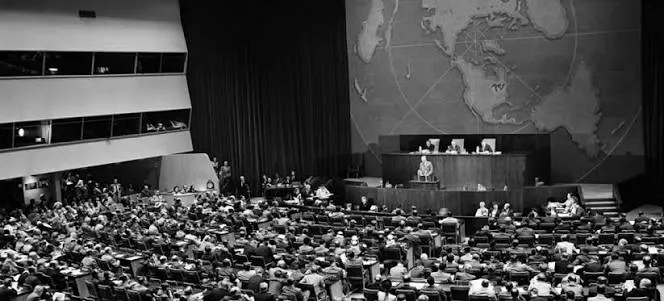
On 14 October 1974, the General Assembly invited the Palestine Liberation Organization to participate in its deliberations in its capacity as the representative of the Palestinian people, before granting it observer status on 22 November of the same year under resolution (3237).
On 15 November 1988, the Palestinian National Council declared the independence of the State of Palestine, and the General Assembly recognized this declaration in its resolution (43/177), issued on 15 December of the same year, and decided to use the designation “Palestine” instead of “Palestine Liberation Organization” within the UN system.
On 23 September 2011, President Mahmoud Abbas submitted an official request to the UN Secretary-General for the acceptance of the State of Palestine as a full member of the international organization. The request was referred to the Security Council but did not lead to obtaining full membership.
29 November 2012 marked an important milestone in the Palestinian presence within the United Nations, after the General Assembly adopted resolution (67/19) by a majority of 138 states, granting Palestine the status of “non-member observer state” in the international organization.
On 10 September 2015, the General Assembly adopted resolution (69/320), which approved the raising of the flags of non-member observer states at UN headquarters, and the Palestinian flag was raised for the first time in front of the organization’s headquarters in New York on 30 September of the same year.
On 18 September 2024, the General Assembly adopted a resolution by a majority of 124 votes demanding an end to Israel’s unlawful presence in the occupied Palestinian territory within 12 months, based on the advisory opinion of the International Court of Justice on the legal consequences arising from the occupation’s policies and practices.
The Security Council also adopted, on 17 November 2025, resolution (2803) by a majority of 13 votes, with China and Russia abstaining, endorsing the comprehensive plan put forward by US President Donald Trump regarding the Gaza Strip. The resolution included arrangements related to the ceasefire, aid, reconstruction, and the establishment of an international stabilization force, while referring to the possibility of paving a credible path leading to the Palestinian people’s self-determination and the establishment of their state.
Despite these milestones and resolutions, Palestine still holds the status of a non-member observer state at the United Nations, while political, diplomatic and legal efforts continue to mobilize international recognition of the State of Palestine, obtain full membership, and press for an end to the occupation.
Gaza Catastrophe
The International Day of Solidarity with the Palestinian People again raises questions about the international community’s ability to translate its positions and resolutions into practical measures that end the suffering of Palestinians, amid the continuation of the occupation and the absence of accountability for its crimes.
In the Gaza Strip, the gap between declared solidarity and daily reality is laid bare most harshly, as the repercussions of the genocide war continue to besiege the population amid destruction, displacement and deteriorating living and humanitarian conditions, while hundreds of thousands of displaced people face harsh circumstances with a shortage of shelter, protection and basic needs.
As UN messages and events in support of the Palestinian cause are renewed on this day, the real challenge remains in translating these positions into binding steps that halt the occupation’s crimes, guarantee the flow of aid, provide protection for civilians and put an end to the prolonged suffering of the Palestinians.
The occasion affirms that the Palestinian cause has not lost its presence on the international agenda, but it places the international community before a responsibility that goes beyond issuing statements and marking occasions, to the implementation of resolutions that guarantee the Palestinian people their right to self-determination and national independence, the establishment of their independent, sovereign state with Jerusalem as its capital, and the guarantee of the refugees’ right to return to their homes.