Exclusive Israel Plans 15 New Settlement Industrial Zones to Encircle West Bank and Kill Off Palestinian State
A settlement expert warns of a plan to establish 15 new settlement industrial zones encircling the West Bank and swallowing its land, as part of efforts to foreclose any prospect of a Palestinian state
The expert on settlement affairs and director of the Land Research Center in Nablus, engineer Mahmoud Al-Saifi, has warned of a comprehensive settlement and engineering plan carried out by successive occupation governments to encircle the occupied West Bank and swallow its land, through expanding the establishment of 15 new settlement industrial zones along the “Green Line”, in parallel with accelerating forced displacement in the Jordan Valley and carving out a vast network of bypass roads to foreclose any prospect of a Palestinian state in the future.
Al-Saifi told (Shehab) that the “Oslo Accords” originally stipulated the establishment of 10 Palestinian industrial zones along the “Green Line”, but the occupation reneged on the agreements and turned the idea into a settlement tool for controlling land.
He noted that the danger lies in establishing these zones in direct geographic contiguity between the lands of 1948 and the occupied West Bank, in order to link them and create a reality that is difficult to dismantle.
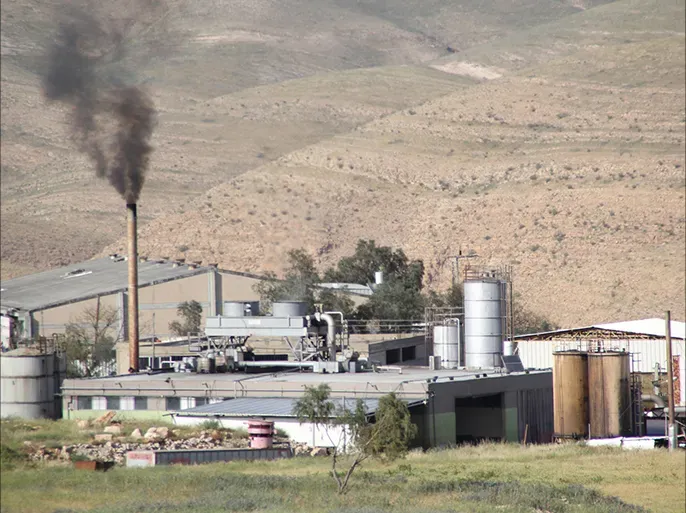
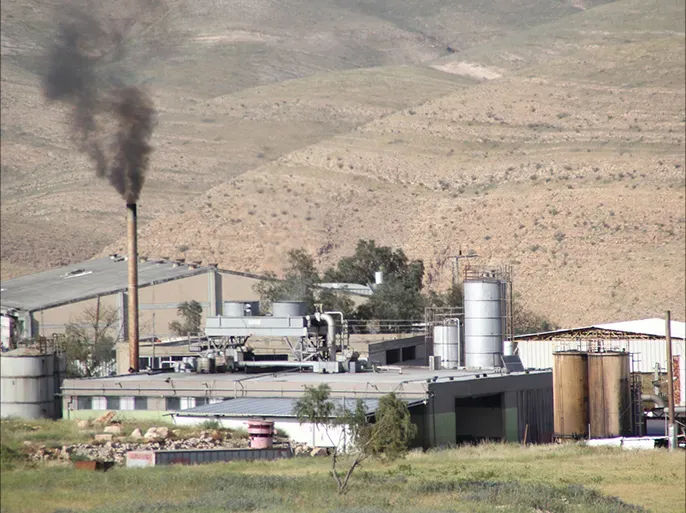
The director of the Land Research Center revealed that the West Bank currently contains 20 settlement industrial zones, most notably in the “Gush Etzion” blocs in the south, “Shaked” in the north, and “Barkan” and “Ariel” in the center, at a time when the occupation plans to establish 15 new zones to bring the total to 35, equivalent to half the number of industrial zones inside the lands of 1948, which stand at 70.
Al-Saifi cited the huge “Bustan HaHevts” industrial zone being prepared near the “Einav Hevts” settlement south of Tulkarm, on the lands of Kafr Al-Labd, Shufa, Al-Hafasi and Jabbara Al-Masad, confiscated in 2019, which is set to include more than 130 factories capable of expansion.
He drew attention to the danger of the occupation allowing foreign companies to open branches and factories inside these zones, considering that this constitutes a blatant violation of international law and a contradiction with the positions of states that announce the imposition of sanctions on settlers and settlement associations.
Al-Saifi pointed to the geographic and functional interconnection between industrial zones and massive residential plans, noting the occupation’s recent announcement of the establishment of a major settlement city west of Salfit governorate (near the Oranit settlement) on an area of 16,000 dunams, accommodating about 200,000 settlers through the construction of more than 60,000 housing units.
In a related context, Al-Saifi explained that the pace of settlement is witnessing an unprecedented escalation on the ground, as 80 settlement outposts were recorded during the year 2026 alone, out of 259 outposts established over the past four years, with a clear focus in the northern West Bank on linking settlements evacuated in 2005, such as Sanur and Homesh, to a network of paved roads.
This expansion is accompanied by the carving of 251 kilometers of bypass roads over the past four years to link settlements to one another and fragment the West Bank lengthwise and crosswise.
With regard to the Palestinian Jordan Valley, Al-Saifi stressed that it is being subjected to a systematic Judaization and displacement process as it is the Palestinian food basket and represents about 29% to 30% of the West Bank’s area, in addition to its geopolitical and water importance as an eastern border with Jordan.
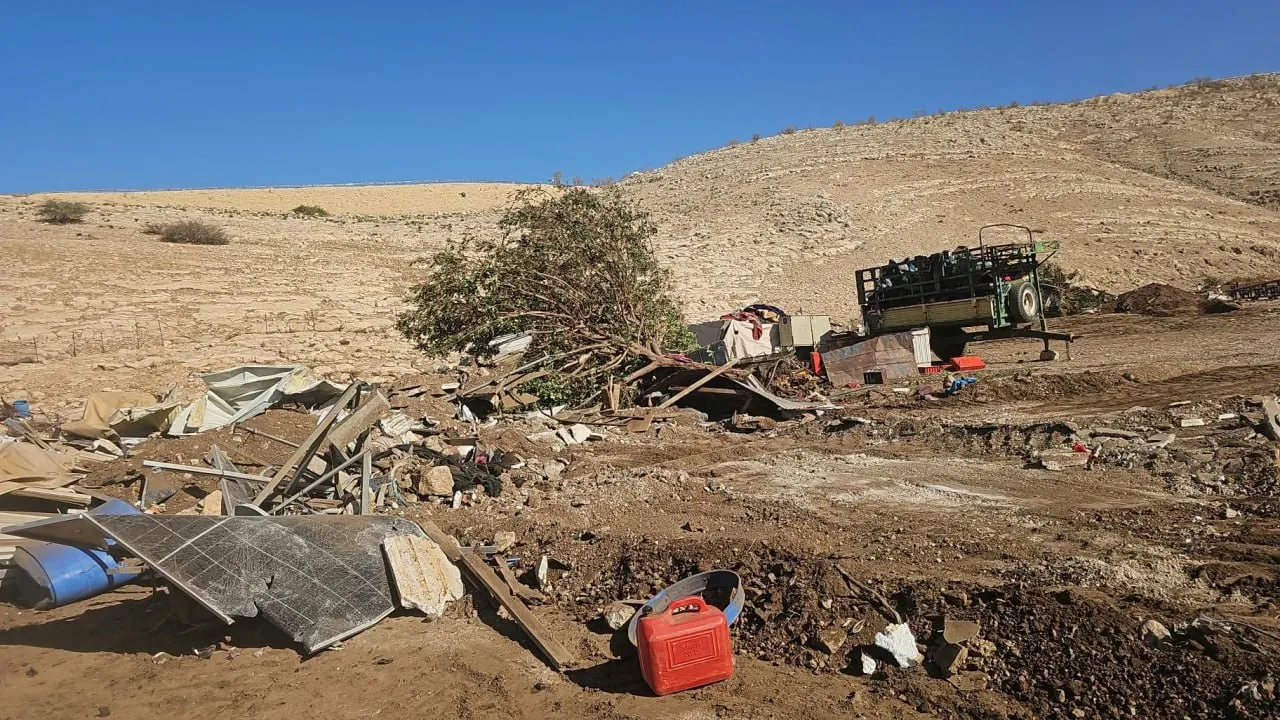
Al-Saifi cautioned against the danger of forced displacement documented by Palestinian and international reports, as about 1,500 Palestinians were displaced from the Jordan Valley during the year 2026 due to pastoral and agricultural outposts that control vast areas and replace displaced communities, citing what happened in the Shalalat Al-Auja community, from which 120 families comprising more than 600 people were displaced and a settlement outpost was established on its ruins.
He added that this displacement is integrated with a policy of geographic isolation, as the occupation is currently working on carving a new settlement road linking the former Al-Hamra checkpoint and the Tayasir checkpoint, which will lead to the isolation of vast areas of land and the severing of geographic contiguity for Palestinian villages and communities in the eastern slopes.
Al-Saifi stressed that changes in the composition of “Israeli” governments do not alter the essence of these plans, explaining that it is a policy of entrenched institutions, as the plans approved during the era of previous governments (such as the E1 plan approved since 1994 during the era of Yitzhak Rabin, or the housing units and demolition operations carried out during the era of Naftali Bennett) are being completed and implemented at an accelerating pace during the era of the current government headed by Benjamin Netanyahu and his finance minister Bezalel Smotrich, with the aim of imposing permanent facts that end any prospect of the establishment of a Palestinian state.