Exclusive Al-Tafakji to Shehab: West Bank Industrial Zones Serve Settlement Expansion and Entrench Control of Land
Khalil Al-Tafakji explains how Israel uses industrial zones in the West Bank to expand settlements and bind them to the economy, pointing to a new project near Tulkarm on 800 dunams.
Settlement affairs specialist Khalil Al-Tafakji said the establishment of industrial zones inside the West Bank is one of the tracks the occupation relies on to expand settlements and strengthen their ties to the economy, noting that this policy began in 1967 and later expanded around major settlements, including Ma’ale Adumim, Atarot and Ma’ale Ephraim in the Jordan Valley.
In an exclusive interview with Shehab News Agency, Al-Tafakji explained that these zones do not function solely for industrial and productive activity, but also help provide jobs for settlers near their places of residence and bolster the foundations for the settlements’ continuity and expansion, alongside the employment of Palestinian workers under arrangements that restrict their access to areas inside the occupied territories.
Al-Tafakji noted that establishing factories and economic facilities inside settlements provides them with a stable economic structure and reduces their dependence on other areas, strengthening their connection to production, labor and services networks.
He added that the employment of Palestinian workers in these zones takes place within a framework of restrictions and security measures that allow them to work inside the West Bank, while they continue to be barred from reaching work areas inside the occupied territories.
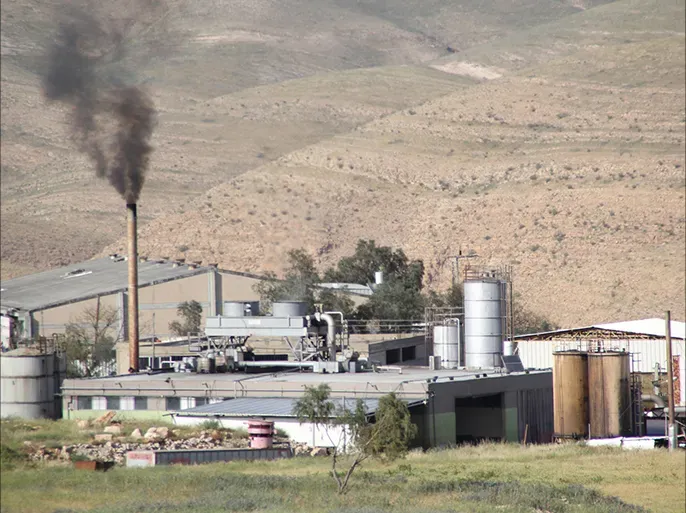
Al-Tafakji pointed out that some settlement industrial zones contain factories and chemical activities with environmental impacts, referring to industrial facilities in the Khadouri and Al-Kana areas that have been linked to concerns over environmental pollution.
He explained that moving some industrial activities into areas inside the West Bank raises questions about the distribution of environmental burdens, as Palestinian areas surrounding the industrial facilities are exposed to pollution risks.
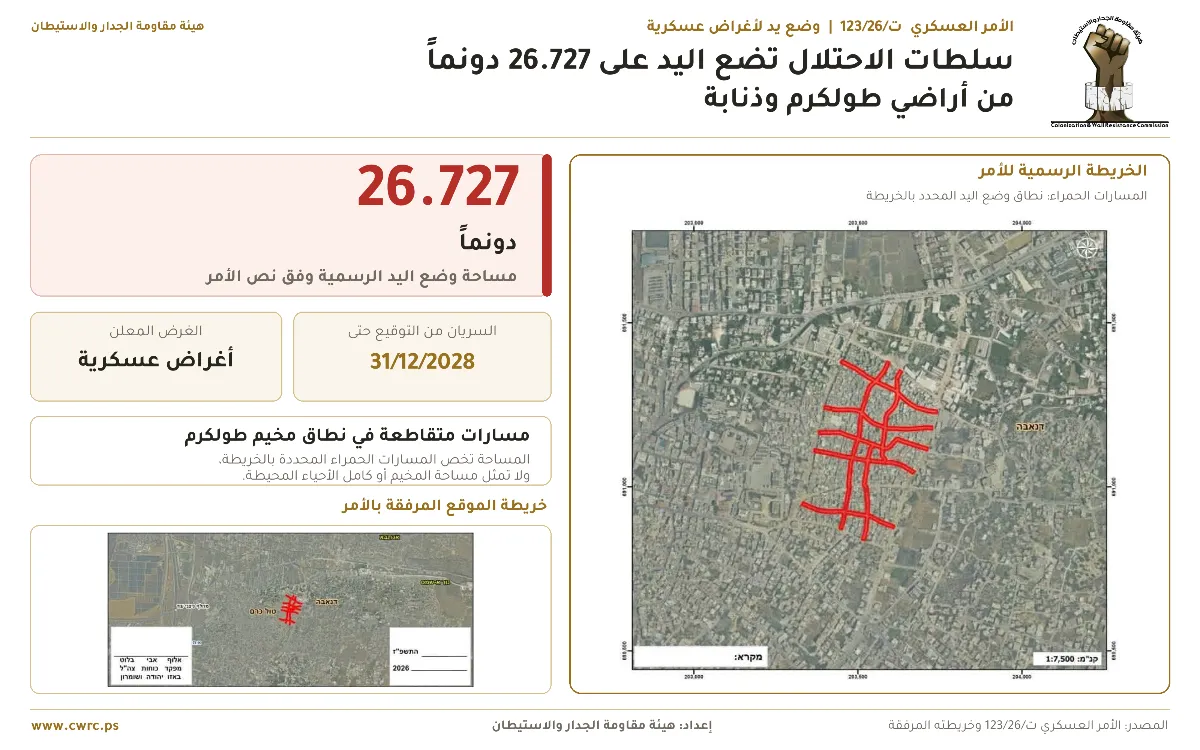
Al-Tafakji addressed new industrial projects, pointing to a project in the Ibn Haifits area near Tulkarm spanning nearly 800 dunams.
He added that most settlement industrial zones are located near the Green Line, which gives them geographic and economic importance by linking settlements to labor, production and infrastructure networks.
He considered that this expansion turns industrial activity into an additional means of strengthening control over Palestinian land and entrenching the settlement presence through the creation of long-term economic foundations.