Battle to Form Israeli Government: Eisenkot Caught Between Contradictory Calculations and the Chance to Oust Netanyahu
The article examines the complexities of forming a government inside Israel and the contest between Gadi Eisenkot and Benjamin Netanyahu, amid the absence of a decisive parliamentary majority and conflicting interests among the change camp, the Haredi parties and the Arab parties, shedding light on the alliance crisis, the conditions of military conscription, and possible scenarios for the future of governance.

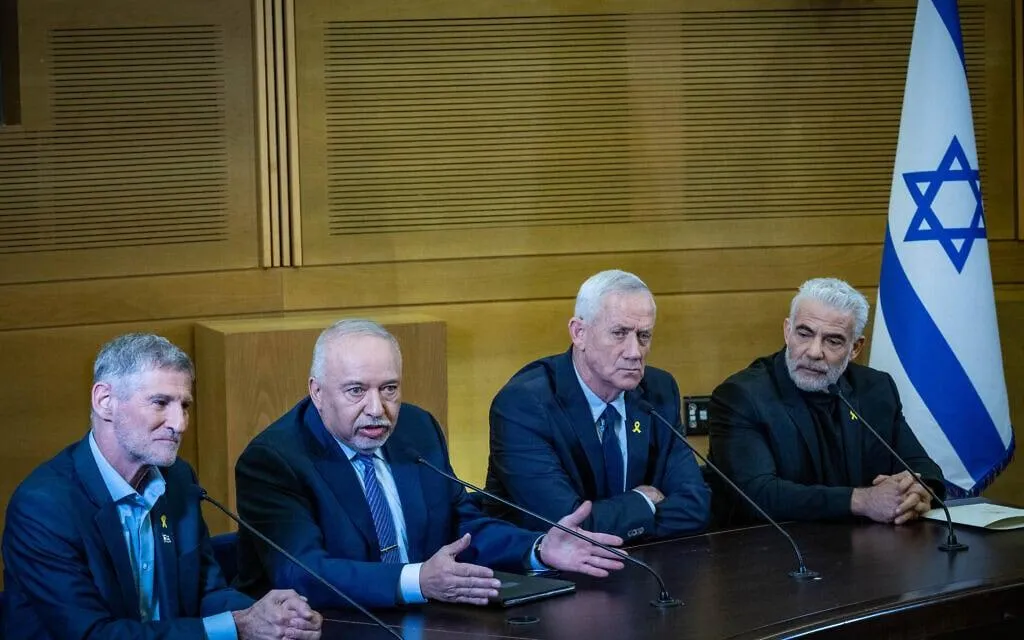
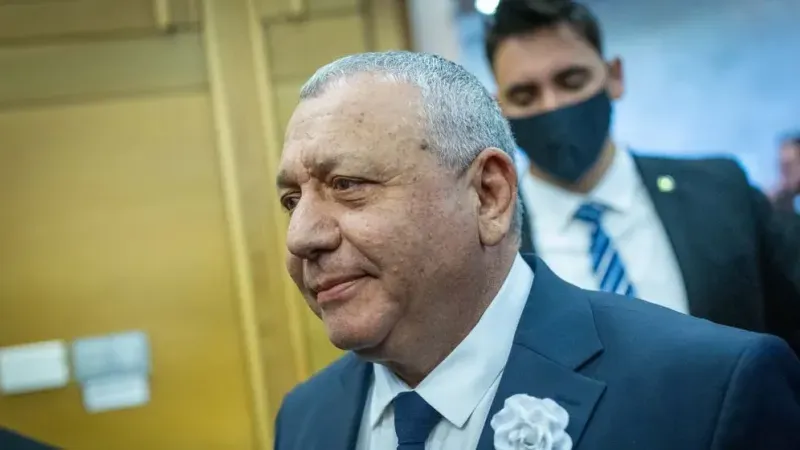
The battle to form the Israeli government is no longer merely a race to collect seats, but a test that exposes the contradictions within the political camps and the limits of agreement on an alternative to Benjamin Netanyahu. Gadi Eisenkot, tasked with forming the government, faces a difficult equation: how to wrest power from Netanyahu without dismantling the camp that brought him to this mission. The Knesset elections produced a landscape in which neither camp is able to form a stable government on its own.
The four parties of the change camp won 48 seats, against 53 for Netanyahu’s camp, while the Arab parties took 19 of the 120 seats. The Arab and Haredi parties have thus become a central factor in the calculations of government formation. The option of a minority government, based on the change bloc and a parliamentary safety net from the Arab parties, was one of the paths before Eisenkot.
This formula does not require the Arab parties to join the government or be given ministerial portfolios, but rests on understandings that ensure their support or their abstention from voting against the government at decisive junctures.
This option represents a way out of the majority dilemma, but it runs into objections within the change camp, particularly from Avigdor Lieberman, who rejects a government that relies on the support of the Arab parties.
Eisenkot’s political and security conditions also make reaching an understanding with him more complicated than simply collecting seats. The most prominent development, however, was Eisenkot’s shift to prioritizing the wooing of the Haredi parties, especially United Torah Judaism, on a path that draws closer to Lieberman’s vision.
These parties do not view the formation of the government merely as a change in the identity of its head, but as an opportunity to extract political, legislative and financial guarantees tied to the interests of their constituency. The issue of military conscription tops their demands.
The Haredi parties want arrangements that protect the members of their community from mandatory conscription and from the penalties associated with evading it, while the change parties fought the elections on the basis of ending privileges and enshrining equality in bearing burdens. Eisenkot thus faces a contradiction between his election promises and the requirements of negotiating with a partner he needs to secure a majority.
Israeli reports in Yedioth Ahronoth and Haaretz indicate that United Torah Judaism is studying transitional arrangements on conscription exemptions that could extend for a year or a year and a half, while Shas’s position remains more closely tied to Netanyahu. Reaching a majority of 61 seats therefore remains uncertain. Netanyahu, for his part, is not standing idle.
He realizes that the Haredim’s move to Eisenkot’s camp could end his rule, and he seeks to prevent this by communicating with religious leaders and warning them that a change government might use their support and then dispense with them after passing the budget, relying on an Arab safety net. This maneuver reveals a paradox: Netanyahu, threatened with losing his Haredi allies, is trying to convince them that the alternative will not guarantee their interests.
At the same time, Eisenkot is forced to reassure them without losing Lieberman and the rest of his partners, an equation whose sides are difficult to reconcile. As for the Arab parties, holders of the nineteen seats, they find an opportunity to impose their presence in the equation of government formation.
Contacts between Arab leaders and officials in United Torah Judaism have shown possible overlaps on conscription, despite differing political and ideological backgrounds. But converting them into practical understandings remains contingent on the positions of the camp leaders and their readiness to bear the political cost.
These developments cannot be separated from Netanyahu’s campaign against the Arab parties and his accusations regarding the integrity of the elections, accusations rejected by the Israeli election authorities. Eisenkot responded that Arab citizens are part of society, and that targeting them collectively for political purposes is unacceptable. But a rhetorical position does not automatically mean readiness for a parliamentary partnership, given the objections within the change camp.
The core dilemma facing Eisenkot is not the absence of options, but the contradiction in their conditions. A minority government requires overriding Lieberman’s objection, a government backed by the Haredim needs thorny compromises on conscription, and a unity government with Likud means retreating from a discourse that made ousting Netanyahu a central goal.
If the negotiations fail, Netanyahu may remain head of a caretaker government, and the opportunity to form a government might even pass to him, before the crisis renews and new elections are proposed. This does not mean the change camp will automatically disintegrate, but it puts its cohesion to a harsh test, especially since its disputes over the Arab and Haredi parties have become fundamental.
In sum, the struggle goes beyond the rivalry between Netanyahu and Eisenkot to the question of the alliances capable of governing Israel. Eisenkot wants to form a government that ends Netanyahu’s era, but he needs partners whose calculations on conscription, religion and state, and relations with Arab citizens conflict with one another.
Netanyahu, meanwhile, is betting on turning these contradictions into an obstacle that prevents his rival from reaching power. Between the Arab safety net and the conditions of the Haredi parties, Eisenkot’s ability to turn numbers into a viable agreement will be determined. The battle is not settled, and Netanyahu remains an active player seeking to influence the shape of the next government, and perhaps to keep his rivals prisoners of their differences during the few decisive days ahead.