
Israeli Army Turns Palestinian Faces Into Surveillance Bank With 3.5 Million Photos on Amazon Servers
A Guardian investigation has revealed that the Israeli occupation army transferred 3.5 million photographs of Palestinians to Amazon servers, to use artificial intelligence for facial recognition and the tracking of Palestinians in Gaza and the West Bank.
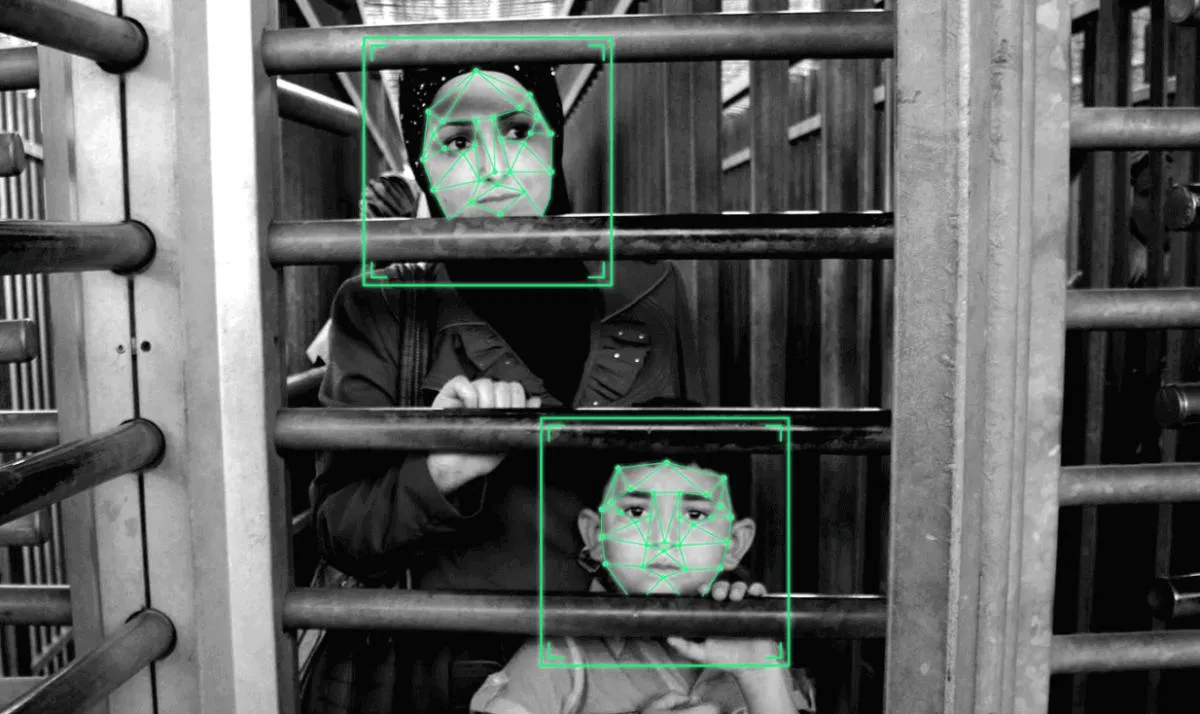
The British newspaper The Guardian has revealed that the Israeli occupation army transferred around 3.5 million photographs of Palestinians to Amazon’s cloud computing platform, as part of expanding the surveillance and digital tracking system it uses to pursue Palestinians and analyse their personal data, employing artificial intelligence for facial recognition.
An investigative report published by the newspaper, based on leaked documents and interviews with military sources, showed that the transfer of the photographs took place during the first months of the Israeli genocide war on the Gaza Strip, which began in October 2023, through a military software unit known as “Rolling Stone,” which maintains vast databases containing personal information on millions of Palestinians in the Gaza Strip and the West Bank.
According to the investigation, the Israeli unit informed Amazon Web Services (AWS) in early 2024 of its intention to transfer millions of photographs to one of the company’s data centres near Tel Aviv, in order to make use of the Rekognition platform, which specialises in image analysis and facial recognition using artificial intelligence.
The move reveals the use of commercial technological infrastructure to expand the occupation’s ability to monitor and track Palestinians, at a time when the residents of the Gaza Strip are subjected to a war of genocide and forced displacement, and severe military restrictions are imposed on them when moving between areas.
Cameras to Track the Displaced
The investigation revealed that the occupation army intensified the collection of photographs of Palestinians after the start of its ground operations in the Gaza Strip in late October 2023, photographing people as they crossed military checkpoints, especially displaced people who were forced to leave their residential areas because of bombardment and destruction.
The Guardian was unable to confirm whether all 3.5 million photographs were collected at those checkpoints, but it quoted a military source familiar with the facial recognition operations as saying that the occupation resorted to Amazon’s cloud infrastructure because of the enormous volume of photographs it had collected.
The investigation noted that a small group of Israeli soldiers worked in early 2024 from Amazon Web Services offices in Tel Aviv to examine the possibility of using the company’s technological infrastructure to operate a facial recognition programme inside the Gaza Strip, without it becoming clear whether those efforts turned into a field application or were directly linked to the transferred photo database.
The documents show that the Rolling Stone unit’s database is not limited to photographs, but includes extensive records on Palestinians, including personal and family information, property data, work permits and movements through military checkpoints, in addition to information related to activities the occupation classifies as criminal.
The unit also collected millions of personal photographs of Palestinians extracted from ID card records, benefiting from the occupation’s control over population records in the Gaza Strip and the West Bank.
A Facial Tracking System
The use of facial recognition technologies is not limited to the Gaza Strip, as the investigation indicated that the occupation army relies on the Blue Wolf application in the West Bank, which allows soldiers to scan the faces of Palestinians and access stored information about them, including their classification on lists of suspects or those wanted for arrest.
In the Gaza Strip, the occupation used cameras at temporary military checkpoints to photograph Palestinians as they approached them, before matching them with photographs stored in databases using facial recognition technologies, according to sources who spoke to the newspaper.
According to the investigation, occupation soldiers stopped Palestinians at some of these checkpoints and then transferred them to detention sites cut off from the outside world, in incidents that raised human rights and international concerns about enforced disappearance and arbitrary detention.
The documents stated that Amazon’s cloud computing technologies were used during periods of 2024 to support the work of those checkpoints, which occupation soldiers called “Nakaz,” a Hebrew word meaning “disposal.”
“Nimbus” in the Service of War
The investigation links the data transfer to the expansion of the occupation army’s reliance on Amazon’s services under the “Nimbus” project, a multibillion-dollar contract the occupation government concluded in 2021 with Amazon and Google to provide cloud computing services to Israeli government and military institutions.
According to the newspaper, the contract includes unusual clauses that prevent the two companies from restricting or suspending the Israeli government’s and army’s use of their services, even in the event of a violation of the terms of use.
With Amazon opening new data centres inside the occupied territories in early 2023, government and military institutions became able to transfer their data from their private servers and from the company’s data centres outside them to the local cloud infrastructure.
The documents revealed that Amazon allocated to the Israeli army an isolated space within its data centres in Tel Aviv, equipped with strict digital and physical security measures, to store sensitive information related to military operations and intelligence gathering.
The newspaper quoted a military source who participated in the data transfer process as saying that the Israeli plan was to migrate the Rolling Stone unit’s databases in full to Amazon servers, including photographs, video clips and secret intelligence information, noting that the unit had already transferred large quantities of its data during 2023.
Amazon Denies
In its response to the investigation, Amazon Web Services said it has no ability to view the nature of the data and operations its customers run through its platform, adding that it respects its customers’ privacy and does not discuss its commercial relationships without their consent.
Regarding the presence of Israeli soldiers in the company’s offices in Tel Aviv, Amazon said customers visit its offices regularly to attend meetings and briefings, and refused to suggest that those visits went beyond normal communication with customers, describing that as incorrect and unsupported by evidence.
The occupation army, for its part, declined to comment on the contracts and services related to its operational needs.
The disclosure comes amid mounting rights criticism over the occupation army’s use of surveillance and artificial intelligence systems in its war on the Gaza Strip, and the risks they raise regarding the collection of Palestinians’ personal data and its use in tracking, security classification and arrest operations, without their knowledge or consent.
Press reports had previously revealed that the occupation used commercial facial recognition technologies in the Gaza Strip, including the analysis of crowd images and drone footage, with cases recorded in which these systems misclassified Palestinian civilians as militants.
These findings shed light on the scale of Israel’s surveillance apparatus, which now combines military control on the ground with Palestinians’ personal data, and draws on global technology companies to provide the infrastructure needed to store and process that data.