Report “Hijarat al-Sijjil” and the Assassination of al-Jaabari: 14 Years Since the Battle That Changed the Rules of Engagement
The 14th anniversary of the Battle of Hijarat al-Sijjil, which was launched after the assassination of commander Ahmed al-Jaabari, a pivotal juncture in the history of the Palestinian resistance and the course of confrontation with the occupation

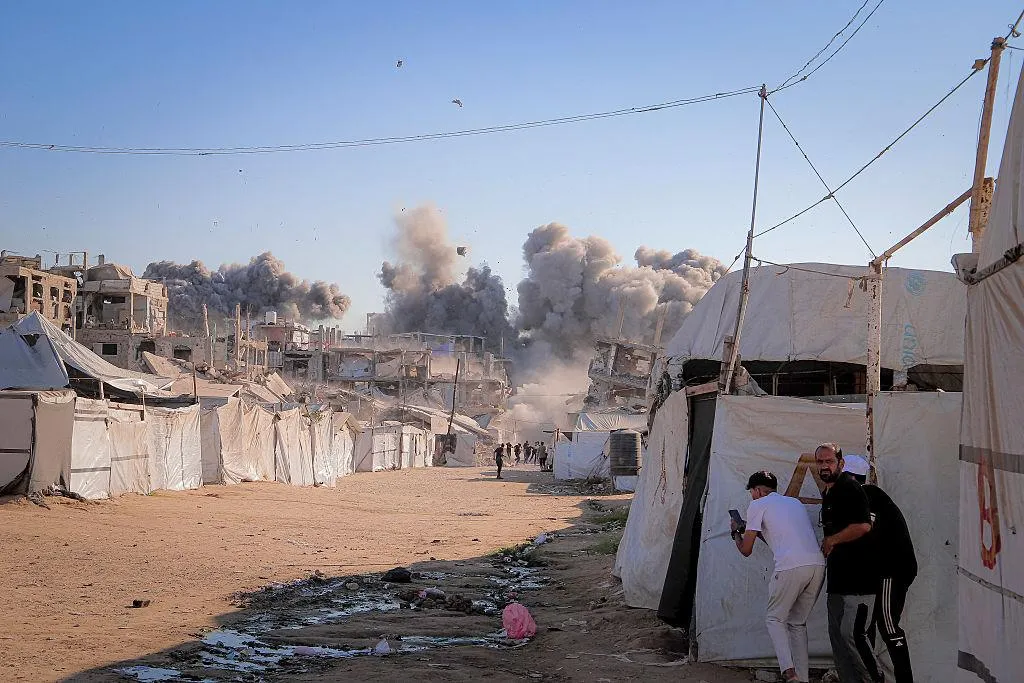
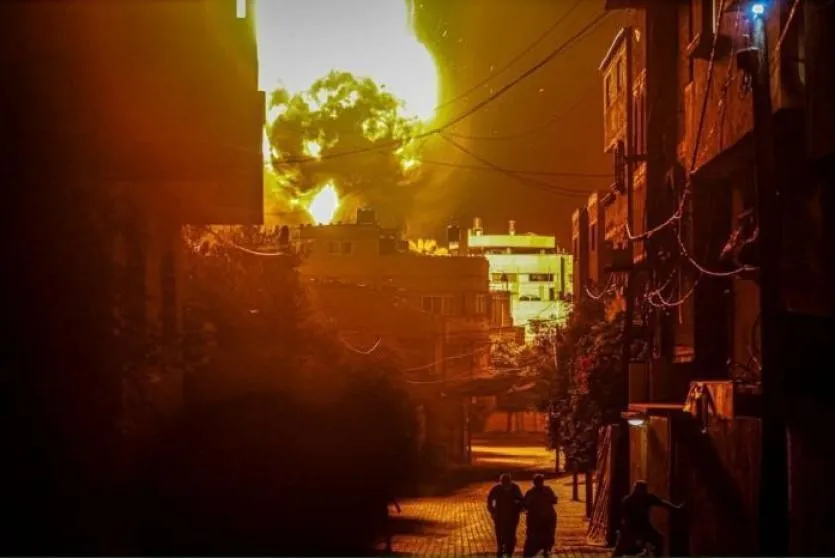
Today, Saturday, 14 November 2026, marks the fourteenth anniversary of the Battle of “Hijarat al-Sijjil,” which the Palestinian resistance factions fought in response to the wide-scale “Israeli” aggression against the Gaza Strip.
It was launched after the occupation army assassinated the deputy commander-in-chief of the Martyr Izz al-Din al-Qassam Brigades, the military wing of Hamas, commander Ahmed al-Jaabari, in an airstrike that targeted his car in the center of Gaza City and also led to the martyrdom of his companion.
Toll of the aggression and occupation losses
The “Israeli” aggression resulted in 175 martyrs, including 43 children and 18 elderly people, and 1,222 others injured (among them 431 men, 207 women, and 88 elderly people).
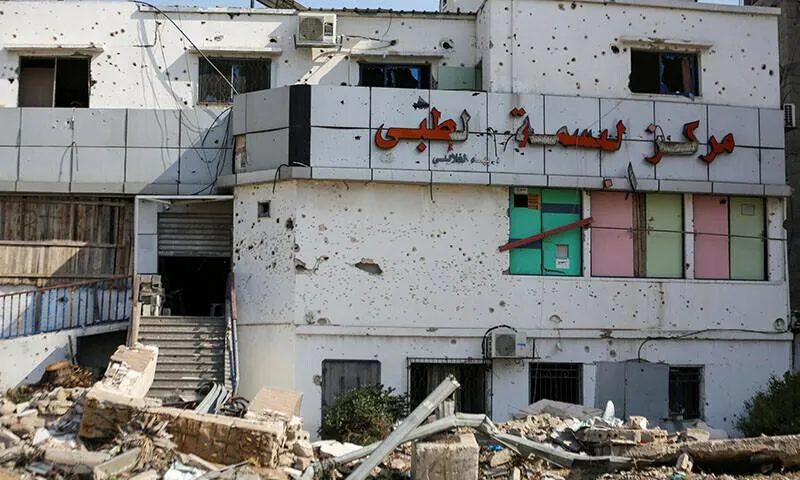
The civilian sector was also damaged, and during its aggression the occupation targeted dozens of mosques, completely destroyed two mosques, and partially damaged others and cemeteries.
On the other side, the occupation sustained losses it officially acknowledged, namely the killing of 5 “Israelis,” including a soldier, and the injury of 240 others. In return, more than 200 residential homes were completely demolished and 1,500 homes partially.
A qualitative leap in the resistance’s capabilities
The battle recorded a qualitative leap in the combat capabilities and military industries of the resistance, as the al-Qassam Brigades announced the firing of 1,573 rockets that targeted occupation vehicles, aircraft, and positions.
For the first time in the history of the conflict with the “Israeli” occupation, the resistance used long-range rockets (whose range exceeded 80 km) to reach “Tel Aviv” and occupied Jerusalem.
The al-Qassam Brigades also brought the “M75” and “Fajr 5” rockets into service, and targeted occupation aircraft and vehicles with qualitative weapons.
The resistance’s rockets strained the occupation’s economy, imposing on it about $30 million in operating costs for the so-called “Iron Dome” system.
Political and strategic dimensions
“Hijarat al-Sijjil” constituted a pivotal juncture that entrenched Hamas’s presence on the political map and opened new regional and international horizons before it.
The movement proved a high capacity to manage the battle at all military, negotiating, media, and field levels according to well-studied plans.
Commander Ahmed al-Jaabari
The assassination of al-Jaabari formed a new juncture in the course of the conflict, the first messages of which were embodied in the shelling of “Tel Aviv” with resistance rockets for the first time.
The martyr Ahmed al-Jaabari was born in 1960 in Gaza City, and grew up influenced by the reality of Arab defeats, becoming convinced early on that the liberation of homelands can only rise through a conscious resistance.
Commander al-Jaabari was arrested for the first time at the age of eighteen on charges of joining a resistance cell, and was sentenced to 13 years in prison.
Inside prison he was influenced by the thought of the late commander-in-chief of the al-Qassam Brigades, Salah Shehadeh (assassinated in the summer of 2002), and soon joined the ranks of Hamas. He devoted the first years of his imprisonment to serving the prisoners and leading their hunger strikes, representing them firmly before the occupation prison administration.
In early 1994, al-Jaabari rejected a release deal conditional on signing a pledge not to engage in resistance, as a gesture toward the “Oslo Accords,” saying his famous phrase: “I spent 11 years in prison, and I will complete the remaining two years, and let no one tell me one day that it was the Oslo Accords that got you out, so why were we created and arrested?”
Al-Jaabari rose through the ranks of the military leadership of the al-Qassam Brigades before and during the Al-Aqsa Intifada, and played a major logistical role alongside his brothers in transforming the armed groups into a trained and armed paramilitary army.
He survived several assassination attempts, most notably the raid of 7 August 2004 that targeted his family home in the Shujaiya neighborhood and led to the martyrdom of his son Mohammed (23), his brother Fathi (38), his son-in-law, and a number of his relatives and his companion, while he himself was lightly wounded.
He also oversaw the most prominent qualitative operations of the al-Qassam Brigades, foremost among them the “Disappearing Illusion” operation that resulted in the capture of the Israeli soldier “Gilad Shalit” on 25 June 2006.
Al-Jaabari’s name stood out in the media and in negotiating firmness during a five-year marathon of negotiations with mediators, culminating in a major success in concluding the honorable prisoner exchange deal “Wafa al-Ahrar” in October 2011, which freed the largest number of veteran prisoners and those serving high sentences.