A Night That Rattled America: Why Thousands of Flights Grounded and What Is Behind the Mystery Glitch?
The story reviews the details of the aviation crisis in the United States, after sudden failures in communications and air traffic control systems forced authorities to halt departing flights, causing thousands of flights to be delayed or cancelled and leaving passengers stranded at airports, amid investigations to uncover the causes of the malfunction and fears it may be linked to artificial intelligence or a cyberattack.
The United States witnessed, on the evening of Friday, November 13, 2026, widespread and unprecedented disruption to air traffic, after the Federal Aviation Administration issued an order halting departing flights from airports across the country, following serious failures affecting communications and air traffic control systems that raised questions about the safety of the technological infrastructure running the American aviation sector.
As aircraft piled up on airport grounds and thousands of travelers were forced to wait or cancel their trips, the precise cause of the malfunction remained unresolved, amid official investigations to rule out the possibility of a cyberattack or a role for artificial intelligence in the crisis.
How did the crisis begin?
The crisis began on Friday afternoon, when the Federal Aviation Administration detected serious problems in air traffic control communications, including radar systems and wireless communication frequencies, raising fears that air traffic controllers would be unable to communicate reliably with aircraft and manage takeoff and landing traffic.
As a result, the agency issued an order halting departing flights nationwide, citing exceptional circumstances and safety requirements, in a step aimed at preventing potential accidents caused by the breakdown of communication systems.
The agency explained that its technical teams had begun investigating the failures, while American media reports indicated that the problem may have originated in network routers, and that air traffic controllers used an artificial intelligence application while handling the crisis, without official confirmation establishing a link to the halt in flights.
An attack or a malfunction?
As the disruption widened, questions mounted over the possibility that American aviation systems had been subjected to a cyberattack, especially since the crisis coincided with failures affecting other technology services.
However, CNN quoted American law enforcement agencies as saying that initial indicators do not support the hypothesis of a cyberattack behind the halt in flights.
For his part, US President Donald Trump said in remarks to Fox News that artificial intelligence or a cyber breach did not appear to be behind the crisis, noting that no one had claimed responsibility for disrupting air traffic.
In contrast, US Homeland Security Secretary Markwayne Mullin did not rule out a possible role for artificial intelligence, stressing that authorities are still investigating the causes of the malfunction.
Mullin stressed that what happened does not resemble the September 11, 2001 attacks, explaining that the crisis is related to a breakdown in communications, and that the decision to keep aircraft on the ground was taken as the safest option until the nature of the problem became clear.
The scale of the losses
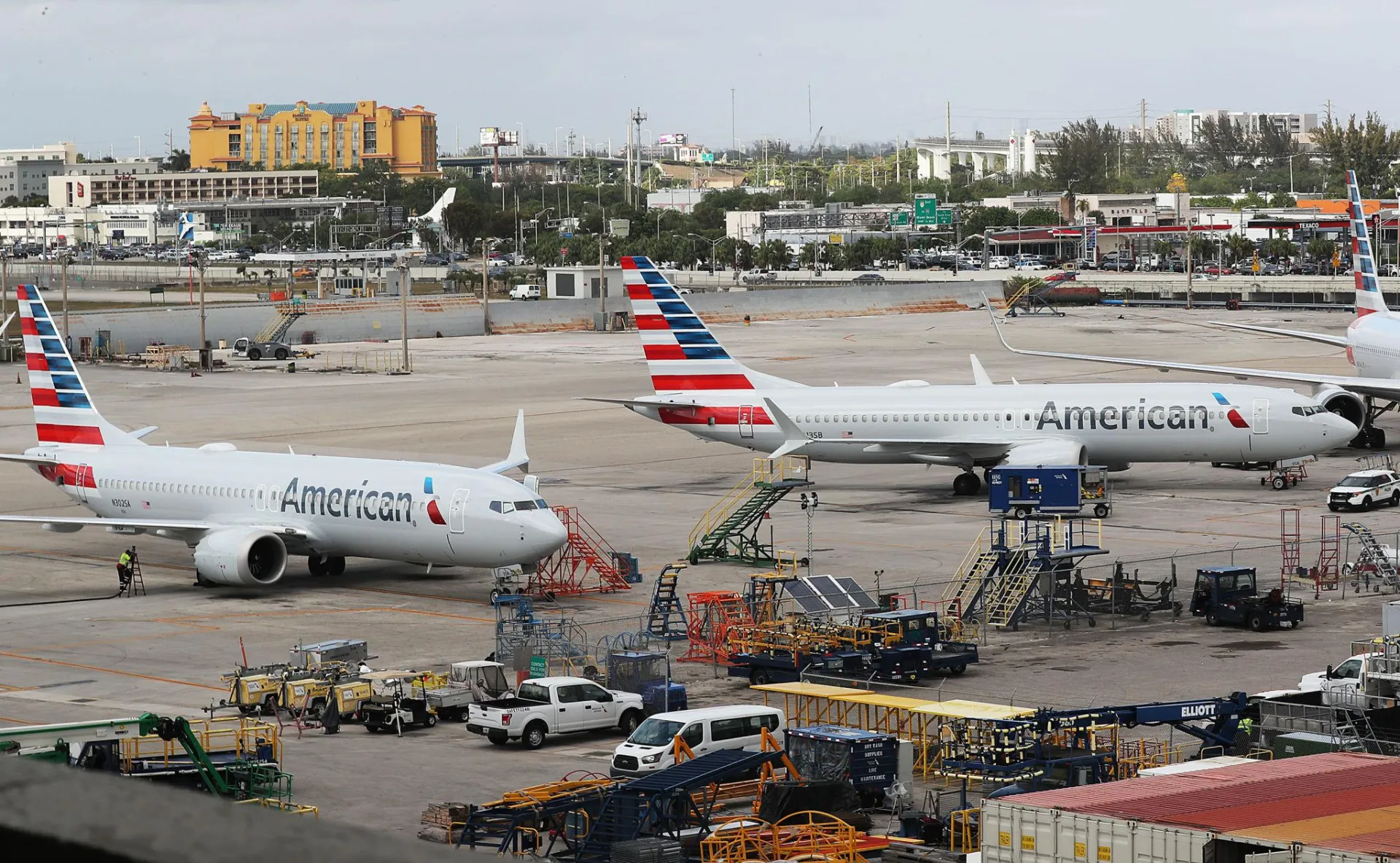
The technical crisis quickly turned into a broad operational crisis, after the suspension of flights led to a pileup of aircraft and travelers at American airports.
According to The Wall Street Journal, the number of delayed or cancelled flights exceeded 13,000, while data from FlightAware showed that more than 3,300 American flights were cancelled and more than 10,200 delayed as of 6:40 pm Friday, Eastern Time.
The repercussions did not stop at flights scheduled for Friday evening, as airlines began cancelling additional flights over the weekend, with more than 300 flights scheduled for Saturday cancelled.
About 500 aircraft also returned to the airports from which they had departed, while more than 100 flights were diverted to other airports, according to data from Cirium, a company specializing in aviation analytics.
This disrupted aircraft and flight crew schedules, as airlines found themselves with aircraft and staff in locations other than those scheduled for their next flights, signaling that the disruptions could extend into the coming days.
Travel suspended
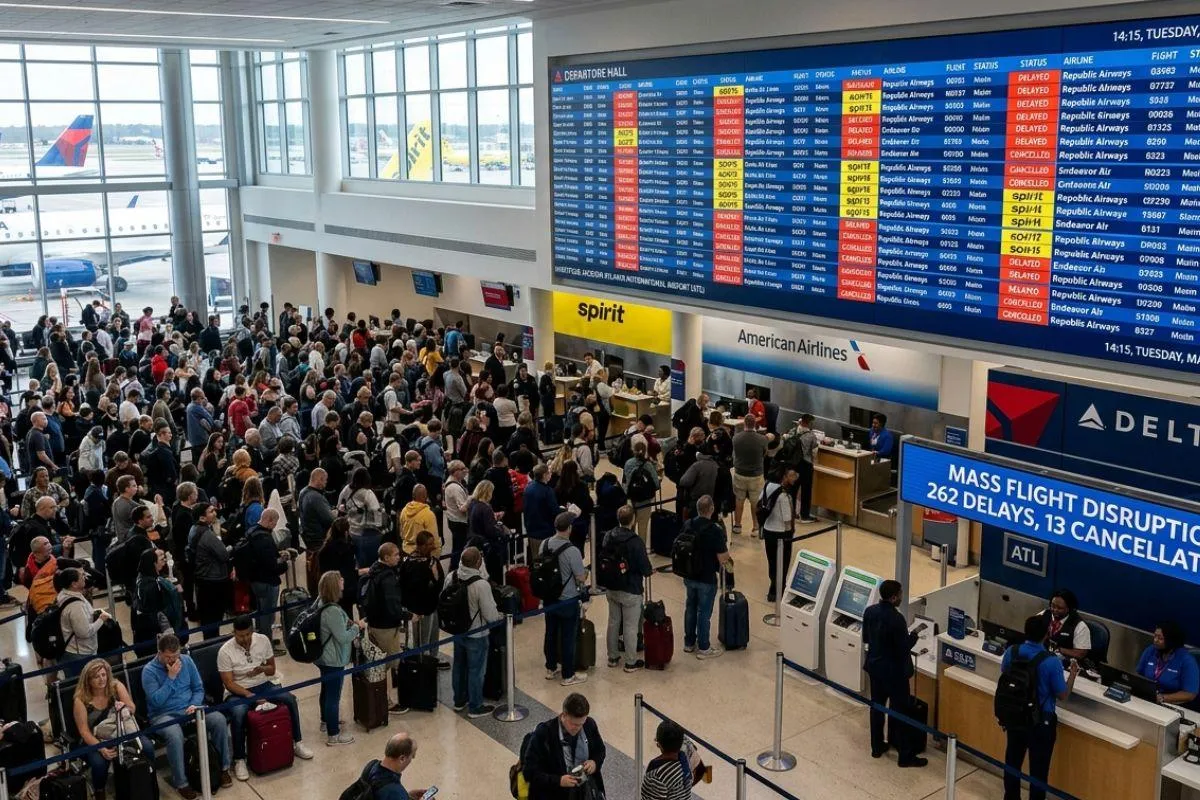
At O'Hare International Airport in Chicago, the crisis was clearly reflected on travelers, with The New York Times describing the scene as chaotic, as passengers busied themselves with their phones trying to rebook flights or find out when air traffic would resume.
The newspaper reported that gate staff asked travelers to be patient, given that they had no clear information about when the crisis would end, while some passengers were forced to spend long hours on the airport floors, and others decided to abandon their trips and return to the city.
With takeoffs halted, airports filled with aircraft and passengers, reducing the space available to receive other flights and raising the likelihood of successive disruptions to air traffic over the weekend.
Despite the suspension order, authorities allowed some international departing flights from the East and West Coasts to take off, according to American media reports.
Other fears?
The questions were not limited to the aviation sector, after American rail company Amtrak announced that its website and app had suffered a technical malfunction, at a time when several Microsoft services had experienced global outages on Friday.
However, Microsoft confirmed that there were no indications its services were linked to the decision to suspend flights, and American media reports said there was no known outage in National Weather Service services.
The coincidence of these failures raised fears about the extent to which vital infrastructure in the United States depends on digital systems, and its ability to cope with large-scale technical failures.
The crisis has once again highlighted the aging technological infrastructure on which the Federal Aviation Administration relies to operate and monitor air traffic.
Last year, the US Congress approved $12.5 billion in funding to modernize the agency's aging communications systems, as part of addressing the technical vulnerabilities facing the aviation sector.
As the problems recurred, the Federal Aviation Administration and the White House asked Congress to allocate an additional $30.1 billion to address other issues and develop the sector’s infrastructure.
These figures raise questions about the ability of current systems to keep pace with the growing volume of air traffic, and whether previous investments were sufficient to modernize a system that is among the most sensitive vital infrastructures in the United States.
A Similar Crisis
The crisis gains additional significance because it is the second nationwide decision to halt departing flights since the September 11, 2001 attacks.
The other instance was in January 2023, when the Federal Aviation Administration halted domestic departures for less than two hours after a failure in the Notice to Air Missions system, known as NOTAM, which is responsible for providing pilots with safety and operational risk information.
But the current crisis has taken on a wider scope, with air traffic control communications affected and thousands of flights disrupted, reviving debate over the fragility of the systems that control aviation movement and the authorities’ readiness to confront sudden failures.
What do we know so far?
Despite statements by Trump and the national security minister, and law enforcement agencies ruling out the cyberattack hypothesis according to preliminary indications, the final cause of the crisis had not been officially announced as of dawn on Saturday, November 14.
Technical teams continue to investigate the communications failures, while airlines try to restore the regularity of their operations and deal with aircraft and flight crews stranded at undesignated locations.
While the hypothesis of a role for artificial intelligence is still under examination without conclusive evidence, the crisis reveals a deeper vulnerability: the dependence of the US aviation system on a communications infrastructure that needs modernization, such that a single technical failure can throw the movement of thousands of aircraft into disarray and leave millions of travelers facing an unclear future for their flights.