“Kingmaker Who Hates Arabs”: Liberman Holds the Keys to Forming the Occupation Government and Narrows Eisenkot’s Options
Avigdor Liberman is positioning himself as a pivotal player in the battle to form the next occupation government, insisting on excluding Arab parties while courting the Haredim, in conditions that complicate Eisenkot’s task and open the way for Netanyahu to stay in power.
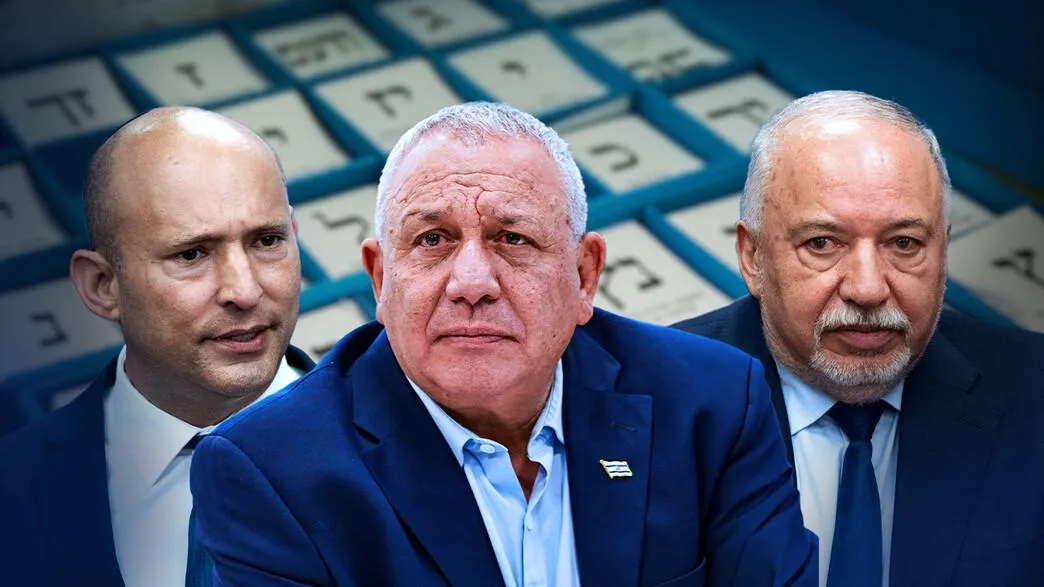
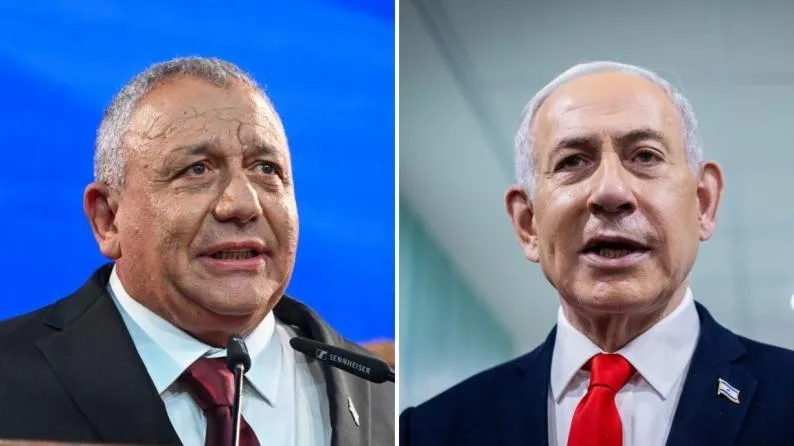
The head of the Yisrael Beiteinu party, Avigdor Liberman, is positioning himself as a pivotal player in the consultations to form the new occupation government, after linking his support for Yesh Atid leader Gadi Eisenkot to the exclusion of Arab parties from any governing coalition, in exchange for working to draw in the Haredi parties — a stance that places the opposition camp before complex political calculations and threatens to keep Benjamin Netanyahu in power.
Liberman’s position exposes contradictions within the camp seeking to end Netanyahu’s rule: he supports Eisenkot on the one hand, but sets conditions before him that could obstruct the formation of a government, especially since the Arab parties hold an influential parliamentary bloc that could provide the votes needed to cross the majority threshold.
Liberman’s refusal to include the Arab parties does not appear to be a passing electoral stance, but an extension of a political discourse he has adopted for years, in which he called for the transfer of Palestinians inside the 1948 territories to the West Bank and the Gaza Strip, and raised the slogan “Ariel for Israel, Umm al-Fahm for Palestine” in one of his campaigns, arguing that the residents of Umm al-Fahm who identify themselves as Palestinians should not remain inside “Israel.”
These positions draw wide criticism from Arab lawmakers, who see them as a hostile approach toward Palestinian citizens inside the territories occupied in 1948, while Liberman presents them under the heading of an exchange of land and population.
Courting the Haredim
During his meeting with Eisenkot, Liberman stressed the necessity of excluding the Arab parties from any arrangements to form a government, asserting that his party will not be part of a coalition that relies on their support, even if that support comes from outside the government.
On the other hand, he expressed readiness to work toward bringing the Haredi parties into the coalition, even though excluding them had been one of the goals he announced earlier during his election campaign.
This shift reflects the priority of parliamentary calculations for Liberman, after the camp to which he belongs failed to obtain enough seats to form a government without the Haredim, as its tally did not exceed 48 seats, pushing him to search for an alternative majority of 61 lawmakers.
Liberman believes that forming a government that includes the Haredim is better than establishing a minority government dependent on the Arab parties, hinting that he would head to new elections if this equation cannot be achieved.
The seat map places Eisenkot before limited options; while 67 lawmakers recommended tasking him with forming a government, including 19 from the Arab parties, he needs to draw in at least 13 additional lawmakers from outside his camp to reach the required majority.
The most prominent options are joining the two Haredi parties, Yahadut HaTorah and Shas, which hold seven and six seats respectively, but their entry into the coalition is tied to conditions that conflict with Eisenkot’s pledges regarding the conscription law and obligating everyone to military service.
On the other hand, the Joint List has raised the possibility of providing parliamentary support from outside the government, while abstaining from voting, which would allow the formation of a minority government with the support of the Ra’am party to pass, but Liberman’s rejection of this option weakens the chances of implementing it.
The obstacles are not limited to his position; indications suggest that Haredi circles also refuse to support a government that relies on the Arab parties, while Yahadut HaTorah conditions joining the coalition on passing a governmental formula for the conscription law.
This condition collides with Eisenkot’s pledge not to back down from the principle of military service for all, at a time when the Haredi parties insist on obtaining exemptions for wide categories of their followers, amid reports of pressure exerted by Netanyahu on Haredi religious authorities to prevent the formation of a government headed by Eisenkot.
Influence beyond government negotiations
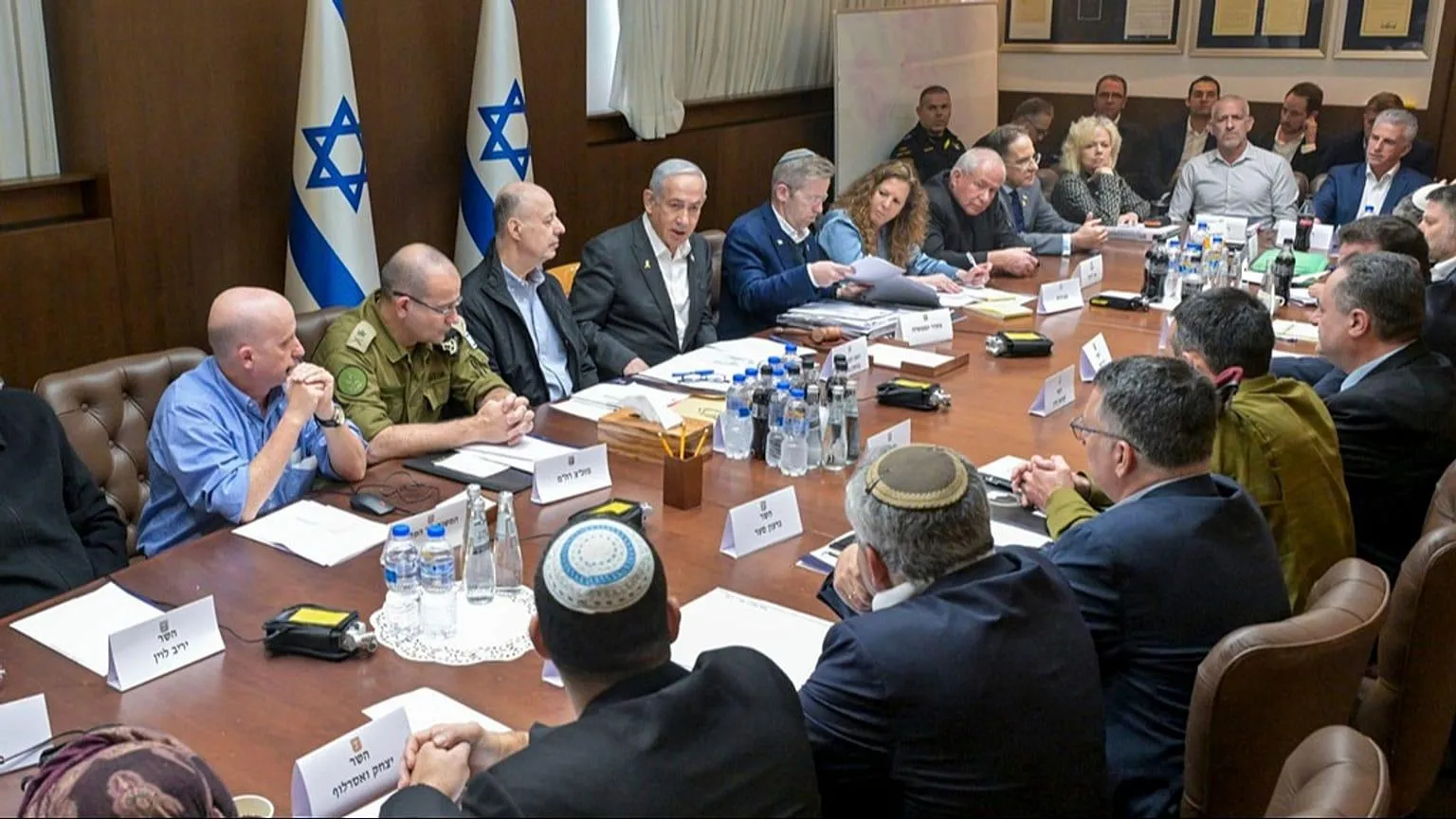
Parallel to the government formation negotiations, Liberman is seeking to strengthen his influence within the political and security institutions, after the Knesset approved the formation of the temporary Foreign Affairs and Defense Committee and elected him its chairman by a majority of 13 votes to nine.
Liberman announced his intention to summon the heads of the security agencies, including the head of the Shin Bet, the chief of staff and the head of the Mossad, in a step that gives him room to exercise parliamentary oversight over security and military decisions during the transitional phase.
In this context, the newspaper Maariv quoted political sources expressing fears that Netanyahu would try to delay Liberman’s assumption of the committee chairmanship until Monday, amid estimates that a surprise military decision could be taken during the next five days.
These fears remain within the framework of what the newspaper quoted from unnamed sources, without independent confirmation.
The matter gains importance given that Netanyahu remains at the head of the transitional government, which legally enjoys broad powers similar to those of a regular government, including taking major military decisions, while being subject to considerations of restraint.
Reports also spoke of Chief of Staff Eyal Zamir resisting pressure exerted by Netanyahu to strike Iran ahead of the elections.
Although the Foreign Affairs and Defense Committee does not have the authority to prevent a military decision or impose a veto on it, its chairmanship gives Liberman tools for questioning, accountability and political and media pressure on the government and the security establishment.
Three possibilities
The current consultations are heading toward three main tracks; the first is Liberman’s success in drawing in the Haredi parties, allowing the formation of a government with a majority of 61 lawmakers without the participation of the Arab parties, an option that requires a settlement regarding the conscription law.
The second track is the formation of a minority government based on the support of the Arab parties from outside the coalition, with work later on expanding it, but Liberman’s rejection and the positions of the Haredi parties reduce the chances of this scenario succeeding.
If the two tracks falter, the possibility remains that Eisenkot fails to form a government, which could open the door to tasking Netanyahu again or heading to new elections, while the latter continues to manage the transitional government during this phase.
Eisenkot has 28 days to form a government, with the possibility of a two-week extension, placing him in a political race governed not only by the election results but also by the ability of Netanyahu’s opponents to overcome their disagreements over the Arab parties and the Haredim.
Lieberman thus emerges as one of the most influential players in determining the shape of the next government, benefiting from his position in coalition negotiations and his chairmanship of the Foreign Affairs and Security Committee, while the hardening of his positions could weaken Eisenkot’s chances and give Netanyahu an additional opportunity to remain in power.