Under Fire for Tenth Straight Day: Israeli Forces Continue Displacement and Siege, Paralyzing Life in Hebron
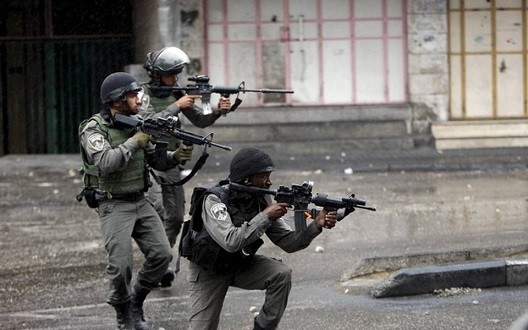
For the tenth consecutive day, Israeli occupation forces continue their siege of Hebron, tightening military measures in its neighborhoods and entrances amid escalating forced displacement, home demolitions, shop closures and disrupted schools, while the attacks have extended to agricultural land, where farmers are driven off their land at gunpoint, as humanitarian and economic losses mount under the ongoing assault.

For the tenth consecutive day, Israeli occupation forces continue their siege of the city of Hebron and are tightening military measures in its neighborhoods and entrances, amid escalating forced displacement, home demolitions, shop closures and disrupted schools. The attacks have extended to agricultural land, where farmers are driven off their land under threat of arms, as humanitarian and economic losses widen with the continuation of the assault.
The tightened military measures are concentrated in the Ain Deir Bahha and Al-Jalda areas, where occupation forces continue to besiege residential neighborhoods, carry out raids and searches of homes and vandalize their contents, while pushing additional military reinforcements toward the western part of the city and forcing more families to forcibly evacuate their homes.
Occupation forces have imposed a comprehensive military closure on the Ain Deir Bahha neighborhood and announced through loudspeakers a ban on presence and movement in its alleys, while detaining dozens of young men and subjecting them to field interrogation and abuse. Filmed footage showed occupation soldiers forcing detained Palestinians to place their hands above their heads in humiliating conditions before leading them away to an unknown destination.
These measures escalated after occupation forces blew up on Friday the homes of the martyrs Ahmed and Hamouda Al-Jaaba in the Deir Bahha area, who were killed on 23 October by occupation soldiers' gunfire at the Farsh Al-Hawa checkpoint north of the city. Displaced families still face prevention and abuse when they try to return to their homes.
According to Hebron municipality data, the repercussions of the assault have affected more than 780 families, including 537 families forcibly displaced, while about 5,000 residents face siege and displacement conditions, between displaced people forced to leave their homes and others besieged inside them.
Data from the Support and Relief Committee reveals the scale of humanitarian needs caused by the displacement, having recorded 537 families comprising 3,361 individuals, including 232 infants, 1,193 children, 326 elderly people, 147 pregnant and breastfeeding women, as well as 32 persons with disabilities and 213 people with chronic diseases — groups facing harsh conditions as restrictions on movement and access to basic services continue.
On the economic level, the occupation measures have affected commercial facilities and homes, with the owners of a tile showroom in the Farsh Al-Hawa area west of the city notified to evacuate it within 24 hours ahead of its demolition, and citizens forced to leave the area under threat of arms after a military bulldozer was brought to the site.
According to municipality data, occupation forces have demolished 15 homes and facilities and closed 327 shops under military orders, while direct economic losses have exceeded 12 million shekels per day, equivalent to about 3.8 million dollars.
For its part, the Hebron Chamber of Commerce estimated daily losses from the closures at between 10 and 12 million shekels, including about one million shekels in the dairy sector alone, amid disrupted sales and distribution and difficulty in bringing goods to markets.
The damage was not limited to commercial activity, as infrastructure losses exceeded 6 million shekels, while losses in the health and environment sectors reached about 500,000 shekels, as a result of damage to roads, networks and various facilities.
The disruption has also extended to schools, with about 80,000 male and female students denied access to their schools in the city of Hebron, while other data showed education disrupted for about 262,000 students in 589 schools across the governorate last week, with thousands of students in besieged and displaced areas still unable to reach their schools.
Around the city, the attacks have extended to agricultural land and the olive harvest, as settlers, protected by occupation forces, attacked farmers in Khirbet al-Kharaba east of the town of Samu south of Hebron, forced them under threat of arms to leave their land, and stole the olive crop.
In a related context, occupation forces continue to close the entrances and exits of the city of Hebron and to set up dirt barriers and concrete blocks on main and secondary roads, isolating residential neighborhoods and obstructing residents' movement and access to basic services.
The military campaign since its start has resulted in the arrest of more than 115 citizens, including a girl, alongside the detention of hundreds of Palestinians and their subjection to field interrogation and abuse, while night raids on homes and vandalism of residents' property continue.
The toll of the tenth day reveals the widening scope of the repercussions left by the assault, with hundreds of families still being displaced, the trade and education sectors disrupted and infrastructure damaged, alongside the tightening of the siege on the city's western neighborhoods and the denial of residents' freedom of movement and return to their homes.
Occupation forces continue their military measures in Hebron and its surroundings, with no indications of an end to the siege, while thousands of families remain caught between forced displacement and siege inside their homes, as raids, closures and attacks on property and agricultural land continue.