From a Handshake That Never Happened to Soldiers at War: AI Is the Occupation's Weapon in Election Propaganda Targeting Palestinians
Election propaganda in Israel no longer relies solely on traditional images and political messages, as artificial intelligence has entered election campaigns to create scenes that never took place, placing Israeli politicians alongside Palestinian and Arab figures.
Election propaganda in Israel no longer relies solely on traditional images and political messages, as artificial intelligence has entered election campaigns to create scenes that never took place, placing Israeli politicians alongside Palestinian and Arab figures, or transporting political rivals onto the battlefield and among occupation soldiers, in an attempt to craft a visual narrative that the audience can hardly distinguish from reality.
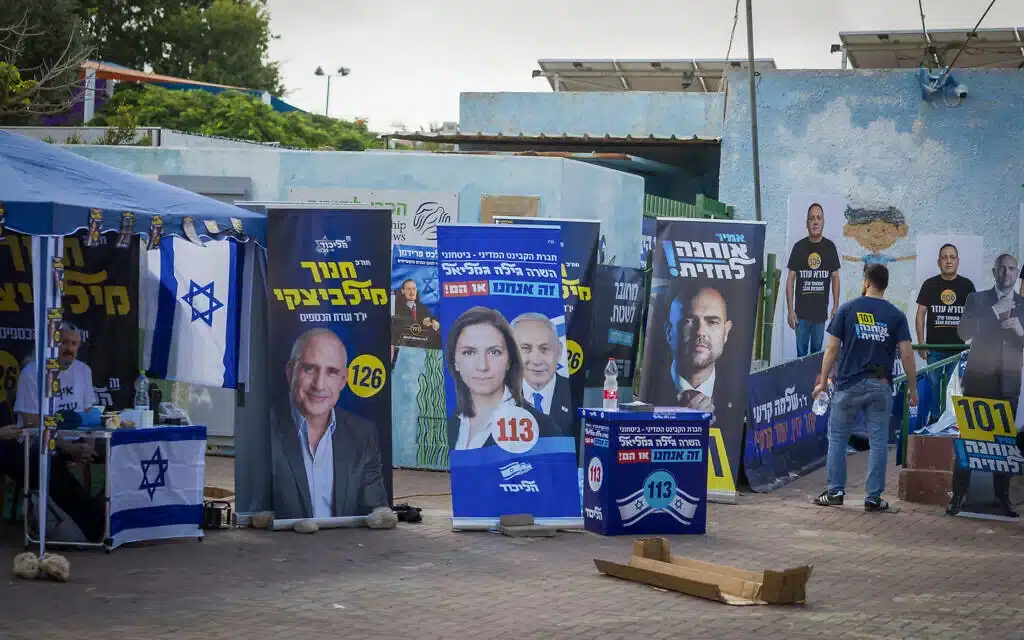
A survey conducted by Hebrew media outlets and a research project tracking the use of artificial intelligence in political propaganda shows that Palestinians, Arab parties, the Gaza Strip, the war and fallen soldiers have become recurring elements in this material in recent months, especially with the Knesset elections scheduled for October 27 approaching.
Fabricated Images
According to the "ZBAI" project, led by Anat Ben-David, a professor of digital communication at the Open University, which monitored posts by parties and politicians on social media platforms, Likud topped the list in using material containing AI-generated or AI-modified components, with such material also present among opposition, religious right and centrist parties.
Data from the project published on August 17 showed that Likud MK Ariel Kellner topped the politicians with 179 items, followed by Hanokh Milwidsky with 79, then Minister Dudi Amsalem with 66, and Avihai Boaron with 61, while Benjamin Netanyahu published 20 items involving the use of artificial intelligence during the monitoring period.
Since the start of the year, Palestinians and Arab parties have featured prominently as recurring material in this propaganda, with generated images used to show political rivals in alliances or meetings that never happened, or to turn existing political ties into more impactful visual scenes.
In January, Likud published a composite image in which former Prime Minister Naftali Bennett and opposition leader Yair Lapid were added to a photo featuring the leaders of Arab parties, appearing with their hands raised alongside them, in a scene that did not happen on the ground.
According to a report by Calcalist, the Central Elections Committee intervened, and in February its chairman, Judge Noam Sohlberg, ordered the image removed, also obliging the party to pay 8,500 shekels to Bennett's party, after deeming that the image's realism could lead the audience to understand it as documentation of a genuine political partnership between the figures shown.
The material did not stop at still images, as clips appeared depicting the masks of Bennett and Lapid falling away to reveal behind them the faces of Mansour Abbas, head of the United Arab List, and Ahmad Tibi, head of Ta'al.
Likud Minister Idit Silman also published a clip showing Bennett waking from a "nightmare" and embracing Mansour Abbas, while Avigdor Lieberman, head of Yisrael Beiteinu, used the technology in the opposite direction, through a generated image bringing together Netanyahu and Mansour Abbas.
But one of the most telling cases came in June, when Finance Minister and Religious Zionism leader Bezalel Smotrich published a video blending real footage with a generated scene showing former occupation army chief of staff Gadi Eisenkot appearing to shake hands with Palestinian Authority President Mahmoud Abbas, before Mansour Abbas joined them.
Manufactured Propaganda
The scene appeared as though it were a real recording of a political event, even though the handshake never happened, which prompted the head of the Central Elections Committee on July 26 to issue a decision removing the video, deeming that the way it was presented and the scene's realism could make the viewer believe they were looking at a real event.
By July, the space of manufactured propaganda had widened to include the war on Gaza and images of the occupation army and fallen soldiers, with the war itself becoming part of the manufactured election scene.
Gadi Eisenkot's party published an election video showing him among soldiers fighting and stationed in a military zone, including a scene simulating soldiers arriving at a family's home to inform them of the death of one of its members.
On August 6, Sohlberg ordered the video removed from the party's accounts, applying the ban on using soldiers in election propaganda to AI-generated military figures, and also obliged the party to pay 5,000 shekels in costs to Likud.
It was not long before Likud used the same scene to respond to its rivals.
During August, the party published a clip showing Eisenkot running through a field of flowers toward a young man, before passing him by and embracing Mansour Abbas. Followers understood the young man's appearance as an allusion to Gal Eisenkot, the son of the former chief of staff who was killed during the aggression on Gaza, before Likud replaced the figure with a woman after the wave of outrage the clip provoked.
In contrast, Benny Gantz's Blue and White party published a video showing Netanyahu walking past a fighter before embracing the Haredi politician Yitzhak Goldknopf, while Religious Zionism placed politicians from the Democrats party inside images surrounded by Palestinian flags, communist symbols, pride flags and dollars.
The use of the war in propaganda extended to materials published by Yonatan Orich, a close adviser to Netanyahu and a member of the Likud campaign team, which included scenes linked to Tehran, Khan Younis and the southern suburbs, as well as a video showing US President Donald Trump speaking in Hebrew with fabricated remarks against Eisenkot.
Materials also appeared depicting former Hezbollah Secretary-General Hassan Nasrallah, former Iranian Supreme Leader Ali Khamenei, and the late Hamas leaders Yahya Sinwar and Ismail Haniyeh playing cards in hell.
Researcher and writer on disinformation and digital policy Idan Ring believes this type of material represents an example of what he calls “slopaganda,” meaning low-cost, rapidly produced artificial propaganda that allows the same visual message to be repeated in different forms.
The cases monitored by the Hebrew press reveal two main patterns. The first is based on producing a scene that a viewer could believe actually happened, such as an image of Bennett and Lapid with leaders of Arab parties, or a handshake between Eisenkot and Mahmoud Abbas.
The second relies on scenes that are more clearly political satire, such as Eisenkot running to embrace Mansour Abbas, or placing Israeli politicians amid Palestinian flags and other symbols. But the speed at which these materials are produced and republished allows the message to be repeated before the public before fact-checking reaches every version of it.
This propaganda comes in an election environment that the Israeli Internet Association says is already saturated with misinformation. In a poll it published on August 30 covering 1,005 adult Jewish and Arab users, 71% said they encounter election-related false information sometimes or often, while 56.8% said they had encountered fake or impersonated accounts, and 48.2% reported encountering harmful use of artificial intelligence aimed at harming people or damaging their reputations.
The use of images of Palestinians, Gaza and killed soldiers gains greater significance within the election campaign because these issues are fundamentally tied to voters’ positions. A poll by the Israel Democracy Institute showed that 68% of Jews and 32% of Arabs consider the events of October 7 a central factor in choosing a party, while security and foreign policy issues topped the priorities of Jewish voters.
Not Enough
As the phenomenon widened, the Knesset approved in July special provisions for the 2026 elections requiring that propaganda depicting a person, place, event or document created or digitally altered in a way that makes it appear to be an original recording be labeled as such.
The labeling rules took effect on July 26, requiring the warning to appear on images and printed materials at a size of no less than 5% of the content’s height, while the warning must appear on video throughout its duration and be heard at the beginning and end of audio material.
But the application of these rules revealed that placing a phrase indicating the use of artificial intelligence does not necessarily mean the viewer will not treat the image as real.
In the case of Smotrich and Eisenkot, Solberg did not consider the location of the warning and the way it appeared on Facebook sufficient to prevent the impression that the handshake between Eisenkot and Mahmoud Abbas actually took place. Orich also published a series of generated images and clips without the required disclosure, before receiving legal warnings, deleting six items and re-producing the Trump video with a warning about the use of artificial intelligence.
The verification process itself faces difficulty given the speed at which these materials are produced. The findings of the ZBAI project indicate that original metadata may be lost when files are uploaded to social networks, and that clips combining real footage with generated footage may not be easily detected by automated tools, which prompted the project to subject every suspicious video to human review by two independent reviewers before finalizing its classification.
Thus, the Israeli elections on October 27 enter a new reality: parties capable of manufacturing a political or military scene within minutes, and reintroducing Palestinians, Gaza, soldiers and the dead into images and clips of events that never happened, while oversight requires detecting the material, examining it and then deciding on it.
By the time the image has made its way to the public, the question may no longer be whether the handshake actually happened, or whether the scene showing Gaza or the soldiers is real, but whether the image’s impact preceded its verification.