Al-Qarra: Shihab Was Not Silenced by Genocide and Its Bias Toward the Resistance Carried Gaza’s Voice to the World
Writer and political analyst Iyad Al-Qarra affirmed that Shihab News Agency maintained its media presence and continued reporting the events of the genocidal war on Gaza despite the destruction of its headquarters, the targeting of its staff and the collapse of the foundations of journalistic work, noting that its media identity and its bias toward the Palestinian cause and the resistance helped carry Gaza’s voice to millions of followers in the Arab world and internationally
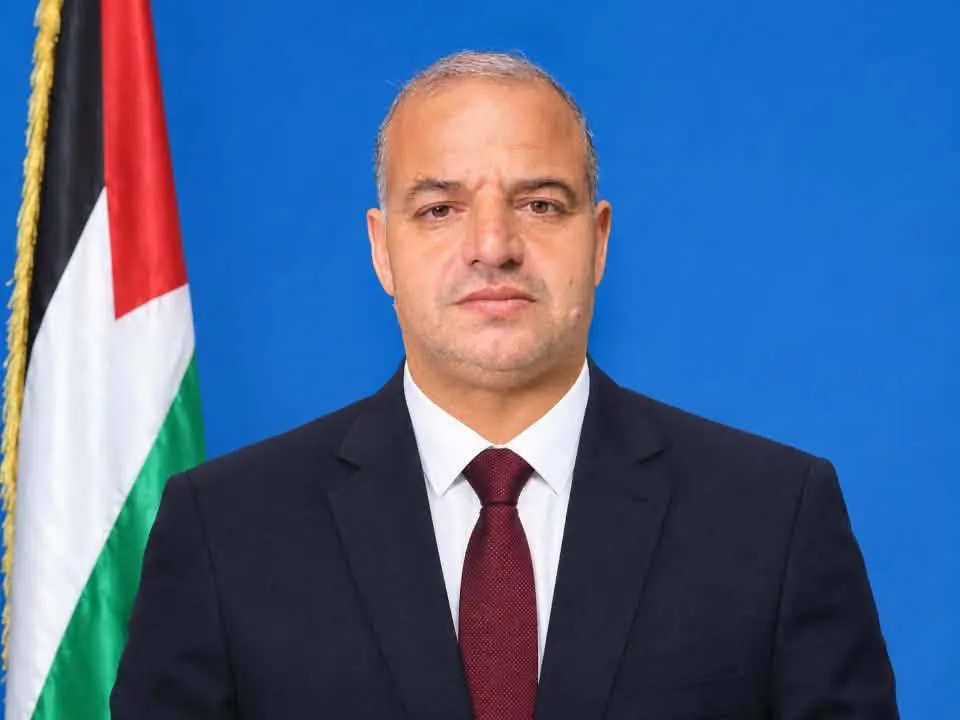
Writer and political analyst Iyad Al-Qarra affirmed that Shihab News Agency succeeded, throughout the genocidal war, in maintaining its media presence and continuing to report events without interruption, despite the harsh humanitarian and field conditions that Palestine experienced and the near-total collapse of the foundations of journalistic work, from the cutting of communications, electricity and the internet to relentless bombardment and the targeting of media institutions and journalists.
Speaking on the occasion of Shihab launching its website in a new design, Al-Qarra said that since the first day of the Al-Aqsa Flood battle, the agency has been one of the Palestinian media platforms strongly present in following events, distinguished by its media identity biased toward the Palestinian cause and the resistance, its keenness to keep its voice present in the Arab media scene, and its refusal to settle for merely reporting events, following instead the various dimensions of the confrontation and highlighting what is happening on the ground.
He added that the significance of Shihab’s experience during the war lies in the fact that it did not stop covering events despite the catastrophe that the Gaza Strip lived through, as its crew worked under extremely harsh conditions with very limited material and technical resources, amid repeated or complete outages of communications, electricity and the internet, and the difficulty of accessing and transmitting information, in addition to the direct risks surrounding journalists as they carried out their work.
He explained that Palestinian journalists found themselves facing an exceptional reality in which the challenges were no longer limited to the difficulty of reaching the sites of events or obtaining information, but extended to threats to their lives, the destruction of the institutions where they worked, and their deprivation of the minimum tools needed to practice journalism. Nevertheless, Shihab continued to perform its role, and its voice remained present in following field, political and humanitarian developments and conveying the picture of what is happening in Gaza to Arab and international audiences.
Al-Qarra noted that Shihab’s headquarters was destroyed in the first days of the war, and that a number of its staff were targeted at various stages, alongside attempts to disrupt and disable its accounts and pages, amid the conditions that Palestinian media institutions faced during the war. Despite this, the targeting of the headquarters or the restrictions on its platforms did not lead to the agency’s absence from the scene, as it continued to follow events and carry out its media role.
He stressed that Shihab played a role in exposing the occupation’s practices and confronting its narrative, within a media battle no less difficult than the field challenges, noting that the agency’s bias toward the Palestinian cause and the resistance and its coverage of events related to them formed part of its media identity and made it present among an audience that follows these files at both the Palestinian and Arab levels.
He explained that the agency’s experience reflects part of the nature of the role played by Palestinian media during the genocidal war, as continuing coverage was not an ordinary matter amid the destruction of media institutions’ headquarters, the targeting of journalists, the cutting of communication networks and the difficulty of field work, but rather represented a real challenge to attempts to silence the Palestinian voice and conceal what is happening in the Strip.
Al-Qarra noted that the ability of Palestinian media institutions to continue was not linked solely to the availability of technical and logistical capabilities, but to the determination of their journalists and staff to keep working and to uphold their role in reporting, documenting and conveying events to the public, despite the risks and conditions surrounding them.
Discussing Shihab’s role in building the Palestinian narrative, Al-Qarra affirmed that the agency went beyond the limits of direct news coverage by following the Palestinian cause in its various dimensions, shedding light on the occupation’s practices and following events related to the resistance, which helped keep these files present in the Arab media space.
He added that Shihab was able to build a presence among an audience that is not limited to Palestinians but extends to millions of followers across the Arab world, reaching segments of the Muslim audience and Arab communities in European and American countries, reflecting the breadth of interest in the content the agency provides and its coverage of Palestinian affairs.
He stressed that this presence represents an important asset on which to build in the coming phase, especially since the launch of the website in its new design comes at a time when media is witnessing rapid transformations at both the technical and professional levels, and competition is intensifying among Palestinian and Arab media institutions and platforms.
Al-Qarra believed that what is required of Shihab in its new phase is to preserve its media identity and its presence in following the Palestinian cause, while developing its technical and professional tools to keep pace with the developments of the age and enhance its ability to reach and influence the public.
He explained that the new design should reflect an evolution in methods of presenting information and producing content, whether through the website or social media platforms, with attention to visual content and special, distinguished journalistic material, and the development of ways of presenting news and information in line with shifts in how audiences follow media content.
He noted that media competition is no longer limited to the speed of reporting news, but now includes the quality of content, the depth of treatment, the diversity of presentation tools and the ability to reach different segments of the public, which requires the agency to continue developing its capabilities and benefit from successive technological transformations.
Al-Qarra concluded by stressing that the challenge facing Shihab News Agency lies in combining the preservation of its Palestinian media identity and building on its experience during the genocidal war and the presence it has accumulated among the Arab public, with developing its tools and content to keep pace with the requirements of the coming phase, expressing his confidence in the agency’s ability to continue its strong presence on the Palestinian and Arab media scene.