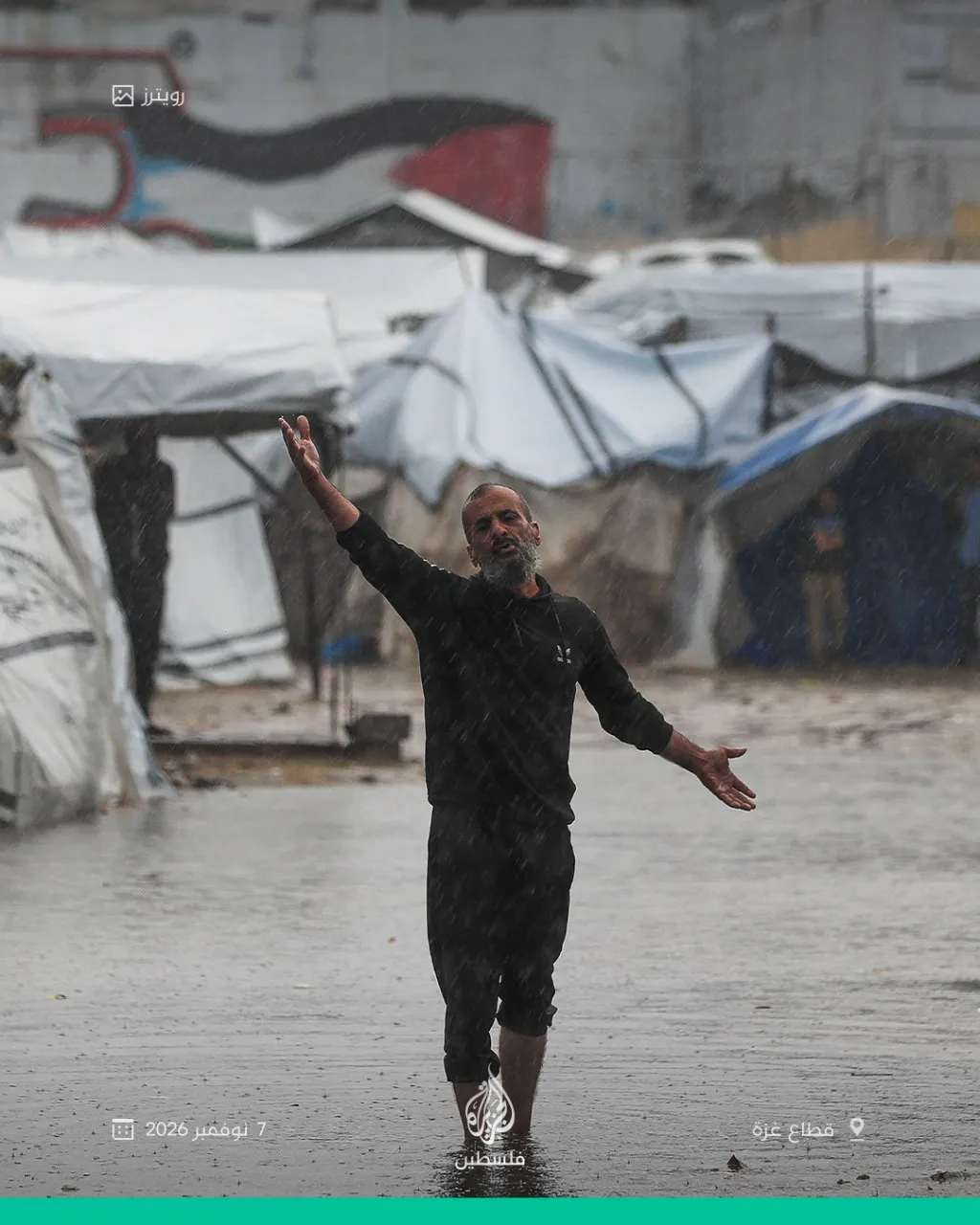
Storm Disaster Deepens Gaza’s Misery as Thousands of Families Left Without Shelter and Hundreds Plead for Help
Around 70,000 tents sheltering displaced people were flooded in the first twelve hours of the weather depression, with initial material losses estimated at about $3 million.
Exclusive/ Shehab
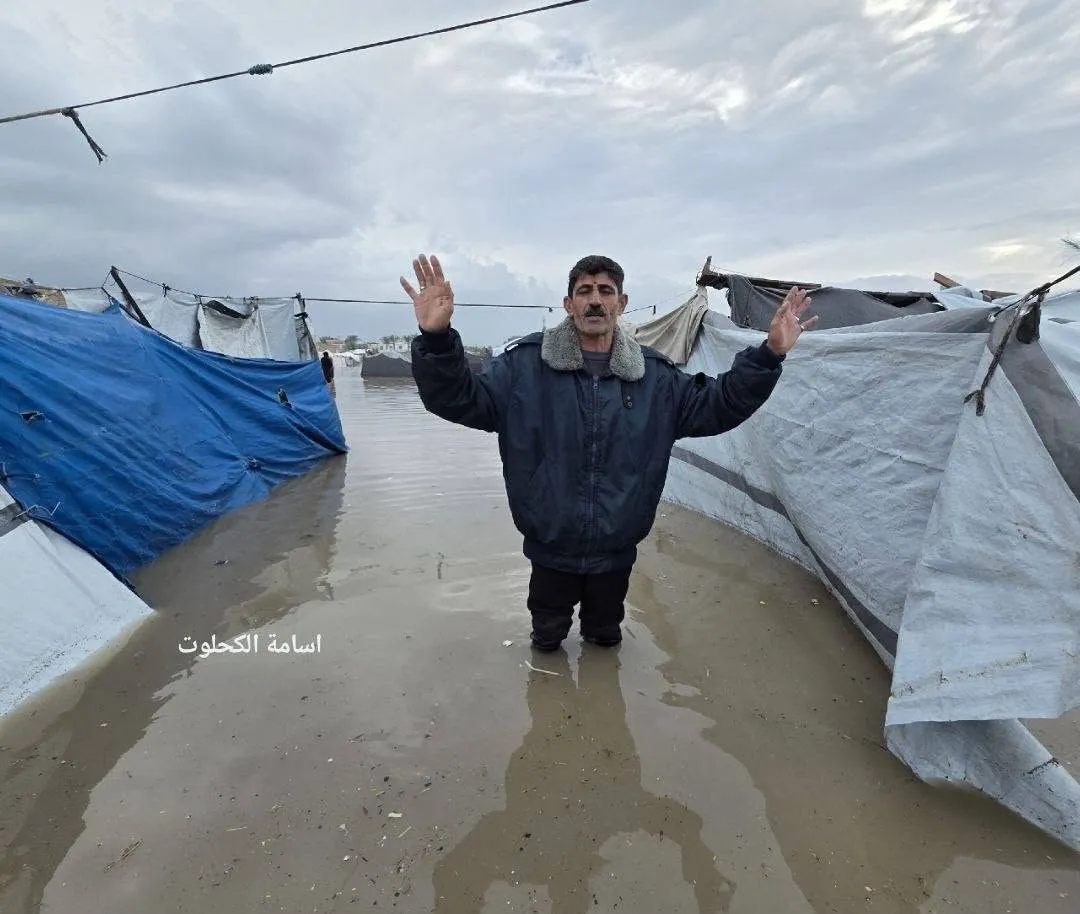
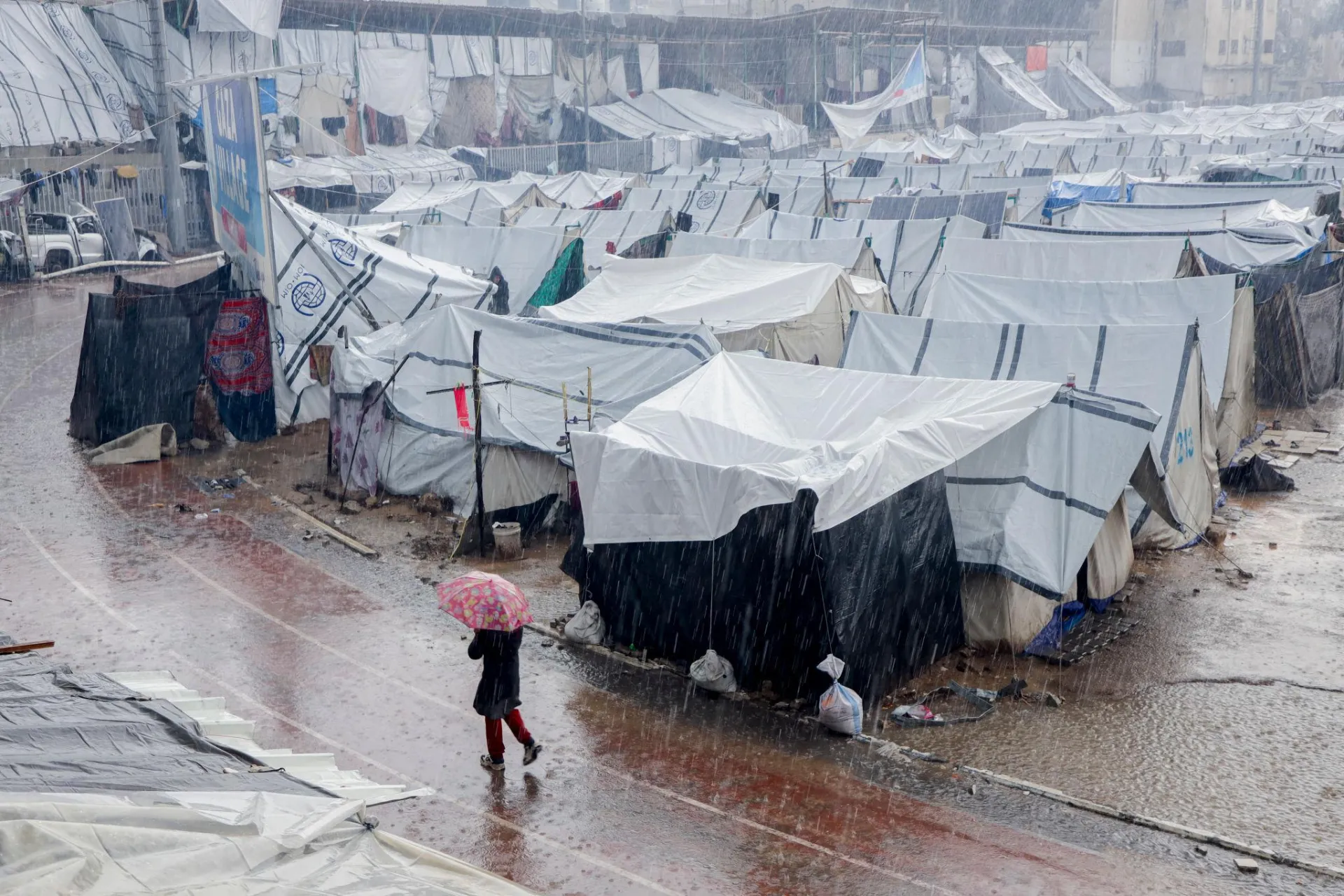
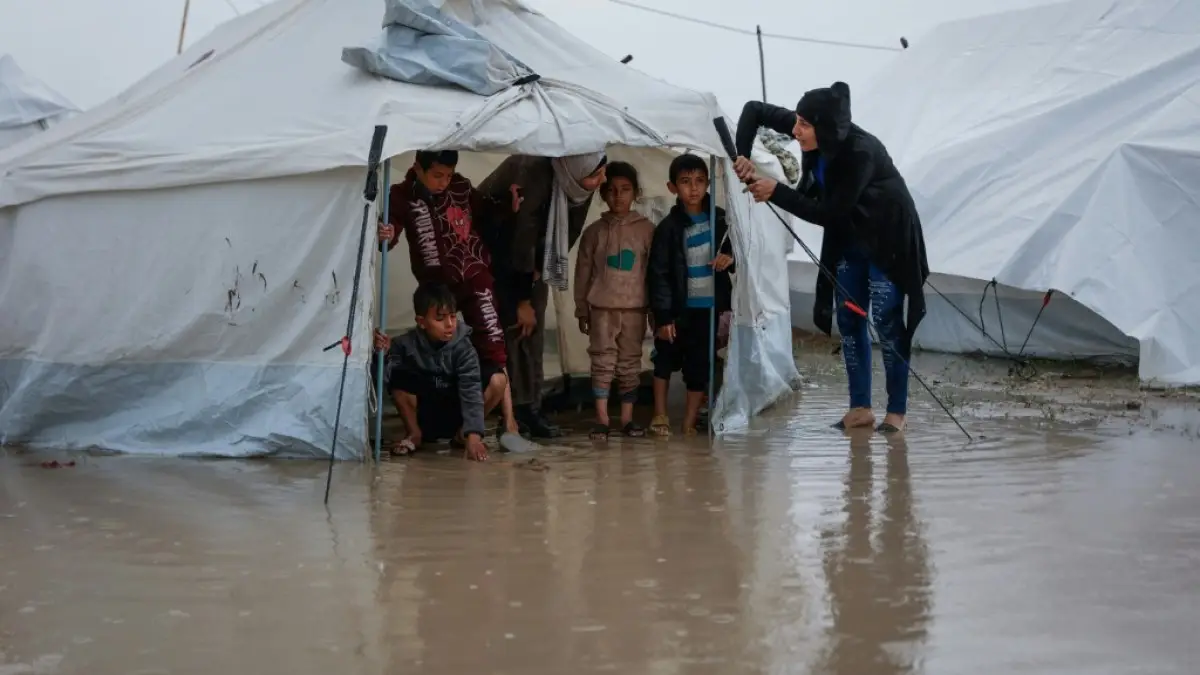
Displacement camps have turned into pools of water and mud, with rain inundating tens of thousands of tents, while strong winds and relentless rain caused partial collapses in residential buildings already damaged by Israeli bombardment, amid injuries, evacuations and hundreds of appeals by citizens to rescue their families in the first hours of the weather depression that began affecting the Strip on Friday evening.
The Government Media Office in the Gaza Strip announced on Saturday that around 70,000 tents sheltering displaced people were flooded in the first twelve hours of the weather depression, estimating initial material losses from it at about $3 million.
Repercussions of the Depression
The office said the depression also caused the collapse of dozens of walls across the governorates of the Strip, leading to injuries of varying severity, including serious ones, and warned of the danger of the collapse of dozens of cracked and dilapidated buildings that were damaged during the genocidal war ongoing for three years.
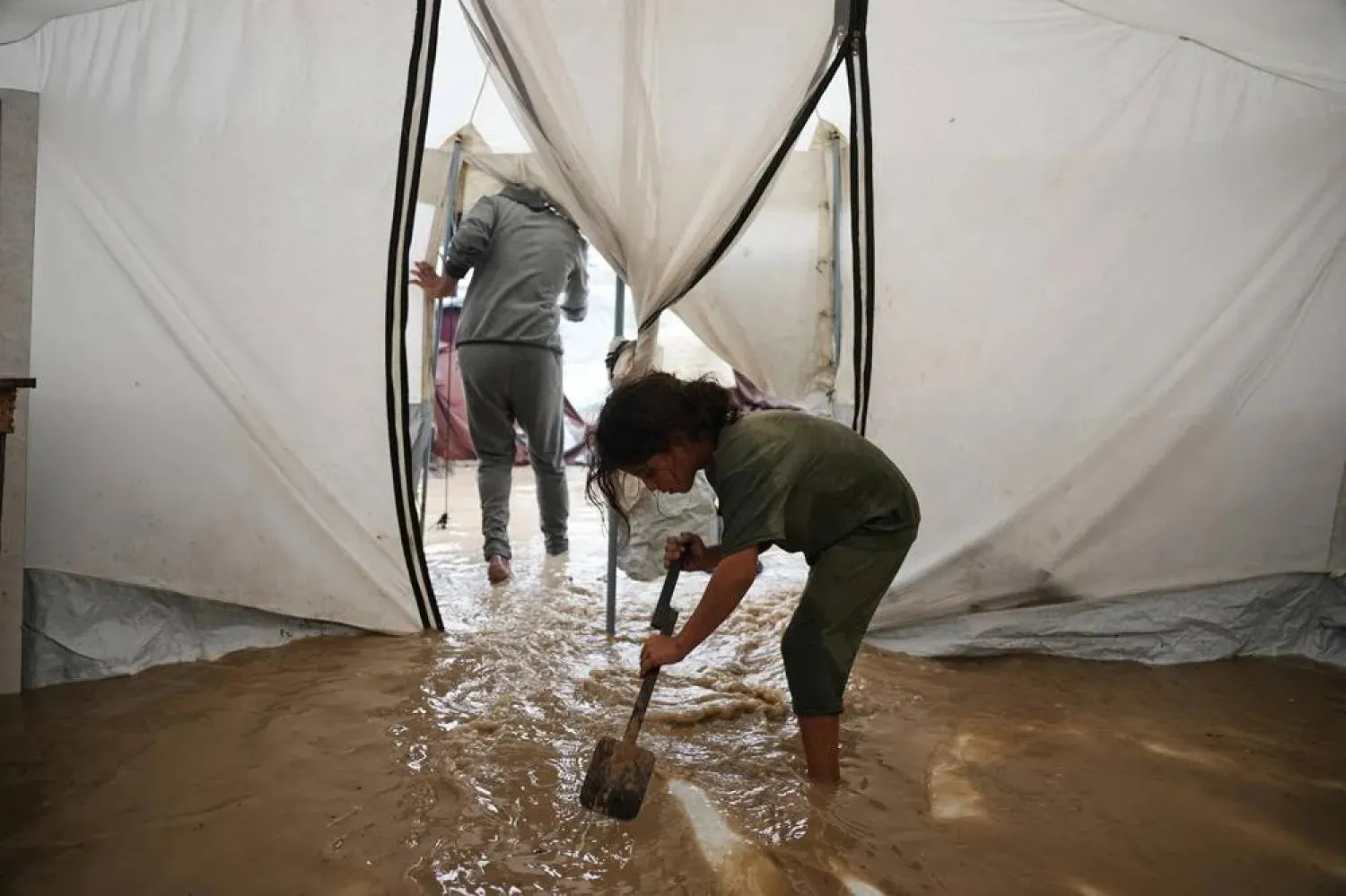
On the ground, the repercussions of the depression extended to various areas of the Strip, where rainwater flooded the tents of displaced people around the port of Gaza City after water seeped into their living spaces, soaking mattresses, blankets and personal belongings, while families tried to salvage what remained of their possessions and move them to higher ground.
In the northern Strip, the damage affected the tents of displaced people in the Jabalia and Beit Lahia areas, with water pooling inside the camps and difficult to drain, while rain and winds damaged the fabric and nylon tents that can no longer withstand the weather conditions.
In the central governorate, water flooded the tents of displaced people west of Deir al-Balah, and large numbers of tents were also flooded in the northern areas of the Nuseirat camp, after stretches of displacement sites turned into pools of water and families became trapped inside their damaged shelters.
According to field reports, the damage extended to the al-Mawasi area of Khan Younis in the southern Strip, where the tents of displaced people were damaged by rain and strong winds, at a time when sufficient shelter alternatives were unavailable for families who lost their places of residence and basic necessities.
These developments come as hundreds of thousands of Palestinians rely on tents and temporary shelter centers, after their homes were destroyed or rendered uninhabitable by bombardment, making any change in weather conditions a direct threat to their lives and stability.
In an indication of the scale of the disaster, the Civil Defense Directorate in the Gaza Strip announced that it had received more than 1,500 distress calls since the onset of the weather depression, from citizens whose tents and shelter centers were damaged across the governorates of the Strip.
Civil Defense confirmed that entire camps have been recorded as flooded in areas and cities of the Strip since dawn on Saturday, noting that displaced families, including children and women, are facing the repercussions of rainwater flooding and washing away their tents, amid repeated humanitarian appeals for protection and shelter supplies.
Acute Shortage
The directorate warned that its limited capabilities do not allow it to cope with the repercussions of the depression, given the acute shortage of equipment and machinery designated for pumping water from areas where rain has pooled.
It called on local and international institutions to provide urgent support including equipment, machinery, fuel and relief supplies, stressing that protecting the lives of citizens, especially children, women, the elderly and the sick, must be the priority in dealing with the repercussions of the weather conditions.
The numbers of distress calls reveal the scale of the pressure facing rescue and emergency teams, at a time when the affected areas are expanding and families need urgent interventions to drain water and secure alternative shelter.
The repercussions of the depression were not limited to the tents of displaced people, as heavy rain and strong winds caused partial collapses in residential buildings that had previously been bombarded by the occupation, reviving fears of cracked buildings falling on their occupants.
Medical services reported that two citizens were injured by the collapse of a wall of a building damaged by Israeli bombardment in the northern Strip, after parts of the building were affected by rainwater.
In a separate incident, Civil Defense crews in the central governorate were able to evacuate citizens from inside a three-story residential building, part of which collapsed due to strong winds, opposite the Al-Ahly Club in the Nuseirat camp, with no injuries recorded.
These incidents come as Palestinian families are forced to continue living inside buildings that suffered severe damage during the war, due to the lack of alternative housing, despite the risks that multiply as walls and foundations become saturated with rainwater and winds intensify.
Civil Defense had warned citizens last Thursday against remaining inside cracked and dilapidated houses and buildings, or pitching tents next to them, calling on them to stay away from cracked walls and head to safer places.
Renewed Warnings
The General Directorate of Civil Defense renewed its warnings on Saturday of the dangers of remaining in damaged buildings, explaining that the saturation of foundations and walls with rainwater could lead to additional cracks or sudden collapses.
It urged citizens to evacuate buildings showing signs of danger and not to return to them before ensuring their safety by the competent authorities, while keeping children, the elderly and women away from sites at risk of collapse.
It also appealed to humanitarian institutions and the relevant authorities to provide safe and alternative shelter for families forced to leave their homes, warning against risking staying inside buildings that pose a direct danger to the lives of their occupants.
The current disaster comes amid a wide-scale shelter crisis, as the Winter Emergency Committee in the Gaza Strip revealed in early November that there are about 200,000 dilapidated tents sheltering hundreds of thousands of displaced people, including about 7,800 tents pitched in areas prone to flooding and torrents, valley beds, rainwater collection pools and coastal areas.
The committee warned that about 2,000 buildings are cracked and at risk of collapse with the onset of weather depressions, as families continue to live inside damaged buildings and safe housing alternatives remain unavailable.
On field readiness, the committee noted that about 70 percent of the municipalities’ essential operational equipment and 90 percent of civil defense rescue equipment have been destroyed, explaining that the remaining capacity to deal with rainwater pools is limited to five dilapidated suction tankers and 24 small mobile pumps.
It also warned of an acute shortage of fuel, vehicles, spare parts and oils, which are essential to operate the equipment used for draining water, opening roads and responding to emergencies.
The committee called for the provision of about 3 million liters of fuel per month to operate pumps, vehicles and generators, along with the entry of suction equipment, heavy machinery, water-resistant tents, insulators and shelter supplies, and the securing of an emergency operating budget of $37 million to maintain networks and cover the needs of emergency crews.
Harsh humanitarian conditions
On the humanitarian level, UN data showed that about 1.98 million Palestinians, equivalent to 94 percent of the Gaza Strip’s population, need shelter and basic household supplies, while 58 percent of the population faces shelter needs classified as critical or catastrophic.
The Euro-Mediterranean Human Rights Monitor had warned last Thursday that the Strip urgently needs about 200,000 tents and one million tarpaulins to provide a minimum of protection for millions of Palestinians facing winter in harsh humanitarian conditions.
The monitor noted that about 8,600 emergency shelter kits were ready outside the Strip, according to the International Organization for Migration, but their entry remains impossible amid restrictions on the entry of shelter supplies, prefabricated housing and reconstruction materials.
It warned that the continued deprivation of displaced people of adequate shelter, heating and protection exposes them to the risks of drowning, cold and deteriorating health conditions, especially children and the elderly.
The fallout of the weather depression is compounded by the widespread destruction of infrastructure and water and sewage networks, which limits the ability of residential areas and displacement camps to drain rainwater and increases the risk of it pooling in streets and shelter areas.
In this context, the Palestinian Environmental Quality Authority warned on Friday of a worsening environmental catastrophe in the Gaza Strip, citing the accumulation of between 61 and 68 million tons of rubble, including about four million tons of hazardous waste and no less than 50,000 tons of carcinogenic asbestos.
It explained that about 84 percent of water and sewage infrastructure has been destroyed, exacerbating the environmental and health risks facing residents, especially in crowded areas and displacement camps that lack effective drainage networks.
The pooling of rainwater in residential areas and shelter centers raises additional fears of deteriorating health conditions, amid damaged sewage networks and accumulated waste, and the difficulty of providing a safe environment for families living in crowded spaces and adjacent tents.
Responsibility for the catastrophe
For his part, Hamas spokesman Hazem Qassem held the occupation and the relevant international parties responsible for the worsening humanitarian catastrophe in the Gaza Strip, stressing that the scene of hundreds of families drowning inside their tents is a stain on the conscience of the international community.
Qassem said on Saturday that the international community is still incapable of obligating the occupation to lift its siege on the Strip, noting that the relevant parties, including the so-called Peace Council and its representative Nikolay Mladenov, have failed to play their role in ensuring the entry of necessary humanitarian and relief aid.
He called on the mediators to assume their responsibilities toward the agreements concluded and to work to obligate the occupation to implement its commitments, foremost among them the entry of humanitarian aid and shelter supplies needed and sufficient to alleviate the suffering of Palestinians.
He also urged the Arab League to take urgent and effective action to save the Gaza Strip from the ongoing humanitarian catastrophe and to assume its responsibilities toward the Palestinian people.
For its part, the Government Media Office held the occupation responsible for the catastrophic fallout of the weather depression, amid the continued closure of crossings and the prevention of the entry of supplies necessary to protect displaced people and rehabilitate damaged buildings.
It affirmed that the material losses estimated at about $3 million represent a preliminary toll of direct damage during the first 12 hours, warning of the dangers of continued weather conditions on tents and cracked buildings.
The office called on the international community and UN and international organizations to intervene immediately to provide the essentials of shelter and protection and to bring in basic supplies that ensure the protection of displaced people and save their lives.
As the impact of the weather depression accompanied by heavy rain, active winds and a cold air mass continues, attention is turning to the coming hours amid warnings of worsening damage and the continued suffering of families who have nothing but dilapidated tents or damaged buildings to shelter in.
Amid tents submerged in water, buildings threatening the lives of their residents, and rescue teams suffering from a shortage of equipment and fuel, Gaza Strip residents face a new weather depression with limited capabilities and no safe alternatives, while demands are renewed for the urgent entry of shelter and rescue materials before the fallout of winter turns into further human and humanitarian losses.